


Sometimes the moment that changes everything isn’t dramatic.
It’s not a hospital visit. It’s not a conversation with family. It’s not even a decision to seek help.
Sometimes it’s waking up one morning feeling like you’ve been hit by a truck and wondering why.
Your body aches. You’re sweating and freezing at the same time. Your stomach feels unsettled. You can’t seem to get comfortable no matter what you do.
Then you realize something.
You missed your pain medication.
If you’ve ever searched online trying to understand why you suddenly feel like you have the worst flu of your life after skipping a dose, you’re far from alone. Many people begin looking for answers after experiencing exactly this situation.
At Greylock Recovery, we’ve spoken with countless individuals who started their journey with a simple question. What they discovered often changed how they viewed their relationship with medication. For those exploring options like opioid addiction treatment, understanding why these symptoms occur can provide clarity and direction.
It Doesn’t Always Happen the Way People Expect
Many people assume dependence develops only in extreme situations.
They picture years of misuse, obvious life problems, or a complete loss of control.
The reality is often much different.
Some people begin taking pain medication exactly as prescribed. Others start after surgery, an injury, or a chronic pain condition. The medication helps, life moves forward, and everything seems manageable.
Then one day a dose gets missed.
Maybe the prescription couldn’t be refilled right away.
Maybe you forgot.
Maybe you intentionally tried to skip a dose.
Whatever the reason, something feels different.
At first it might seem minor. A little fatigue. Some irritability. Mild discomfort.
Then the symptoms grow stronger.
That’s often when people begin wondering whether they’re getting sick.
Why Your Body Reacts This Way
The human body is remarkably adaptable.
Every day, your brain and nervous system make adjustments to help maintain balance.
When opioids are present consistently, the body gradually adapts to their presence. This adaptation happens quietly and often without obvious warning signs.
Think about walking into a room with a strong smell.
At first, it’s impossible to ignore.
After a while, you barely notice it.
Your brain has adjusted.
Something similar can happen with opioid medications. Over time, the body becomes accustomed to functioning with the medication present.
When the medication suddenly disappears, the body doesn’t immediately know how to respond.
Instead, it begins working hard to restore equilibrium.
That process can create significant discomfort.
Why It Feels So Similar to the Flu
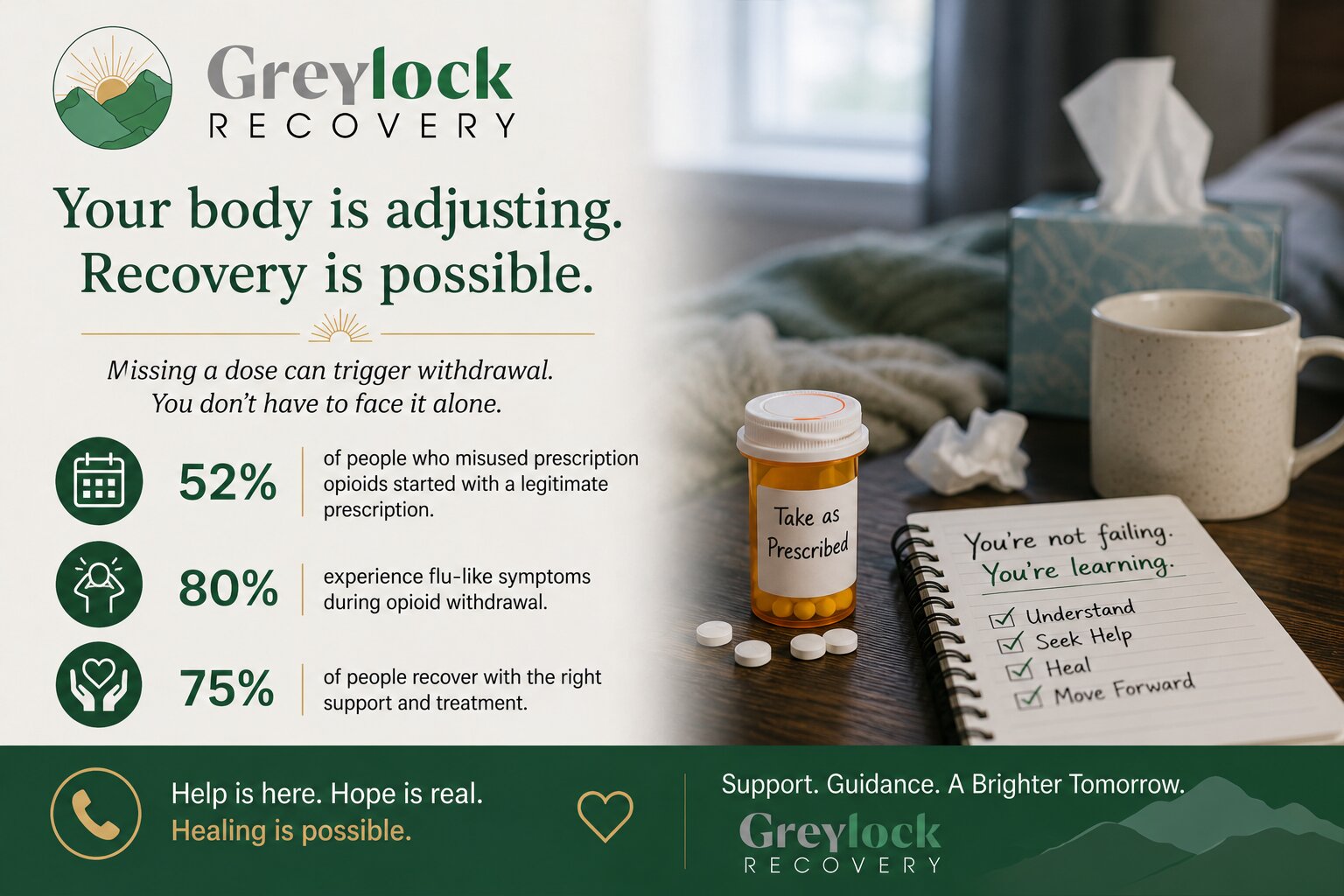
One of the most confusing parts of this experience is how closely it resembles an illness.
People often describe:
- Chills
- Sweating
- Body aches
- Runny nose
- Watery eyes
- Fatigue
- Nausea
- Stomach cramps
- Difficulty sleeping
- Restlessness
Looking at that list, it’s easy to understand why so many people assume they’re sick.
The difference is that a virus isn’t causing these symptoms.
Instead, the nervous system is reacting to the absence of something it has become accustomed to receiving.
These experiences are commonly referred to as opioid withdrawal symptoms.
For someone experiencing them for the first time, the intensity can be surprising. Many people describe feeling physically miserable while also struggling to explain exactly what’s wrong.
The Symptoms Often Feel Bigger Than Expected
One reason people become frightened is that they expect missing a dose to create only mild discomfort.
Instead, they may feel overwhelmed.
The body doesn’t always react proportionally to what seems like a small change.
That’s because opioids influence multiple systems throughout the body.
When those systems suddenly have to function differently, the effects can appear almost everywhere at once.
Your muscles may ache.
Your stomach may feel unsettled.
Your sleep may disappear.
Your energy may crash.
The experience can feel like your entire body is protesting.
This is one reason many people struggle to understand what’s happening initially.
The symptoms don’t feel isolated.
They feel widespread.
The Emotional Side Can Be Even Harder
Physical discomfort is often what gets people’s attention.
The emotional effects are what frequently catch them off guard.
Many people report feeling:
- Anxious
- Irritable
- Restless
- Overwhelmed
- Emotional
- Unable to concentrate
Small frustrations can suddenly feel enormous.
Normal daily responsibilities can seem impossible.
Some people describe a sense of panic that doesn’t appear connected to any specific situation.
This happens because the brain is adjusting too.
When the body is working hard to regain balance, emotional stability can become more difficult to maintain.
The result is an experience that affects both physical and mental well-being simultaneously.
Why Willpower Often Isn’t Enough
One of the most common misunderstandings about withdrawal is the belief that people should simply be able to push through it.
Many individuals tell themselves:
“I just need to be stronger.”
“I’ll tough it out.”
“I can handle this myself.”
The problem is that withdrawal creates powerful motivation to seek relief.
When discomfort becomes intense, taking another pill can seem like the fastest solution.
And in the short term, it often is.
The symptoms ease.
The body feels better.
The cycle temporarily resets.
This can leave people feeling frustrated with themselves.
They may assume they’re failing.
In reality, they’re experiencing a very human response to significant discomfort.
Understanding this distinction matters.
Self-judgment rarely creates solutions.
Understanding often does.
A Sign That Deserves Attention
Experiencing withdrawal doesn’t automatically mean your situation is severe.
It doesn’t automatically mean your life is falling apart.
It doesn’t automatically mean you’re headed toward disaster.
What it does mean is that your body is providing important information.
Many people ignore that information for months or even years because they hope the issue will resolve itself.
Others become frightened and avoid thinking about it altogether.
Neither reaction is unusual.
But awareness creates opportunity.
The sooner someone understands what’s happening, the sooner they can make informed decisions about what comes next.
Looking at the Situation Through a Different Lens
Many people view withdrawal as proof that something is wrong with them.
A more helpful perspective is to see it as evidence that the body has adapted.
Adaptation isn’t a moral failure.
It’s biology.
Your body isn’t trying to punish you.
It’s trying to maintain balance.
When balance gets disrupted, symptoms appear.
That understanding can replace shame with curiosity.
Instead of asking:
“What’s wrong with me?”
You can begin asking:
“What is my body trying to tell me?”
Sometimes that shift changes everything.
Because once people stop blaming themselves, they’re often more willing to explore support and solutions.
You Don’t Have to Figure This Out Alone
One of the hardest parts of this experience is how isolating it can feel.
Many people keep their concerns private.
They worry about being judged.
They worry about what family members might think.
They worry that asking questions somehow means admitting failure.
But reaching out for information is not failure.
It’s awareness.
It’s curiosity.
It’s often the first meaningful step toward feeling better.
If you’ve been wondering why missing pain medication makes you feel so sick, know that you’re not alone in that experience.
Many people have stood exactly where you are now—confused, uncomfortable, and searching for answers.
The good news is that answers exist.
And support exists too.
Frequently Asked Questions
Why do I feel sick when I miss my pain medication?
Your body may have adapted to the presence of the medication over time. When the medication is suddenly absent, the body can react with symptoms that resemble the flu.
Can withdrawal really feel like having the flu?
Yes. Many people experience chills, body aches, sweating, fatigue, nausea, and other symptoms that closely resemble a severe flu-like illness.
How soon can symptoms begin after missing a dose?
The timing varies depending on the medication, dosage, and individual factors. Some people notice symptoms within hours, while others experience them later.
Does experiencing withdrawal mean I’m addicted?
Not necessarily. Physical dependence and addiction are not the same thing. However, experiencing withdrawal is an important reason to speak with a qualified professional about your situation.
Why do I feel anxious when I miss medication?
Opioids affect both the body and the brain. When they are suddenly absent, emotional symptoms such as anxiety, irritability, and restlessness can occur alongside physical discomfort.
Should I ignore these symptoms if they go away after taking medication?
Recurring symptoms deserve attention. Even if discomfort improves after taking medication again, it may indicate that your body has become dependent on its presence.
When should I seek professional help?
If you’re concerned about your medication use, experiencing repeated withdrawal symptoms, or finding it difficult to reduce or stop use on your own, professional guidance can help you understand your options.
Call 413-848-6013 or visit our opioid addiction treatment services to learn more about our addiction treatment, opioid addiction treatment services Williamstown, Massachusetts.