
Some people hesitate to seek help not because they don’t want relief—but because they’re afraid of losing themselves.
It’s a quiet fear that rarely gets said out loud. For artists, deep thinkers, musicians, writers, and emotionally sensitive people, substances can start to feel intertwined with identity. The late nights, the emotional intensity, the creative bursts—it can all feel connected.
Many people begin exploring options like medication-supported recovery care while carrying that exact worry: If I heal, will I still feel like me?
That question deserves honesty and compassion.
Because the truth is, recovery doesn’t erase identity. In many cases, it’s what allows someone to rediscover it.
The Fear That Healing Will Flatten Your Personality
A lot of people imagine recovery as a kind of emotional dimmer switch.
They picture a life that feels muted—less colorful, less passionate, less interesting.
Especially for people whose identities revolve around creativity or emotional depth, the thought of losing intensity can feel terrifying.
You might worry about becoming predictable.
Or boring.
Or disconnected from the part of you that makes music sound deeper, writing feel more honest, or conversations feel meaningful.
But what many people eventually realize is something unexpected: addiction was already flattening parts of their personality.
It just didn’t look that way from the inside.
When Identity Gets Tangled With Substances
Substances often become part of a lifestyle long before they become a problem.
They show up in social circles, creative environments, and emotional rituals.
Maybe they’re part of late-night studio sessions.
Maybe they’re woven into writing habits or social gatherings.
Over time, they can become symbols of belonging or inspiration.
And when something becomes symbolic like that, letting it go can feel like erasing a piece of identity.
But addiction quietly shifts the relationship.
What once felt expressive starts becoming necessary.
Instead of fueling creativity, it begins interrupting it.
Ideas fade before they’re finished.
Projects start but never land.
Energy spikes and crashes in unpredictable ways.
The identity someone is trying to protect slowly gets overshadowed by the addiction itself.
The Moment the Mind Gets Quiet
When people begin healing, the first change is often subtle.
It’s not fireworks or dramatic emotional breakthroughs.
It’s quiet.
For someone who has lived with constant cravings, emotional spikes, and mental noise, that quiet can feel unfamiliar at first.
The brain begins to settle.
Thoughts slow down enough to notice them.
Emotions become understandable instead of overwhelming.
In many cases, that stability is supported through structured treatment services, sometimes including medication assisted approaches that help the brain rebalance after long periods of substance use.
What emerges from that calm isn’t emptiness.
It’s space.
And space is where creativity and authenticity often begin rebuilding themselves.
Creativity Doesn’t Disappear—It Evolves
One of the biggest cultural myths around addiction is the idea that chaos fuels creativity.
Movies, music culture, and literature often reinforce the image of the tortured artist.
But in reality, many creative people discover that stability actually strengthens their work.
When the brain isn’t constantly navigating cravings or recovery from substances, creative energy becomes more sustainable.
Ideas stay longer.
Focus improves.
Projects get completed instead of abandoned halfway through.
Creativity becomes something steady instead of explosive.
Less dramatic, perhaps—but often more meaningful.
Authenticity Grows Stronger With Clarity
Authenticity isn’t defined by intensity.
It’s defined by honesty.
When addiction is active, life often becomes organized around hiding, managing, or recovering from substance use.
That cycle can slowly narrow someone’s sense of self.
Relationships shrink.
Creative pursuits become inconsistent.
Energy gets spent on survival rather than exploration.
Recovery opens that world again.
People often rediscover interests they thought they had lost—art, music, curiosity, intellectual exploration, or simply being present with people they care about.
Authenticity doesn’t vanish.
It expands.
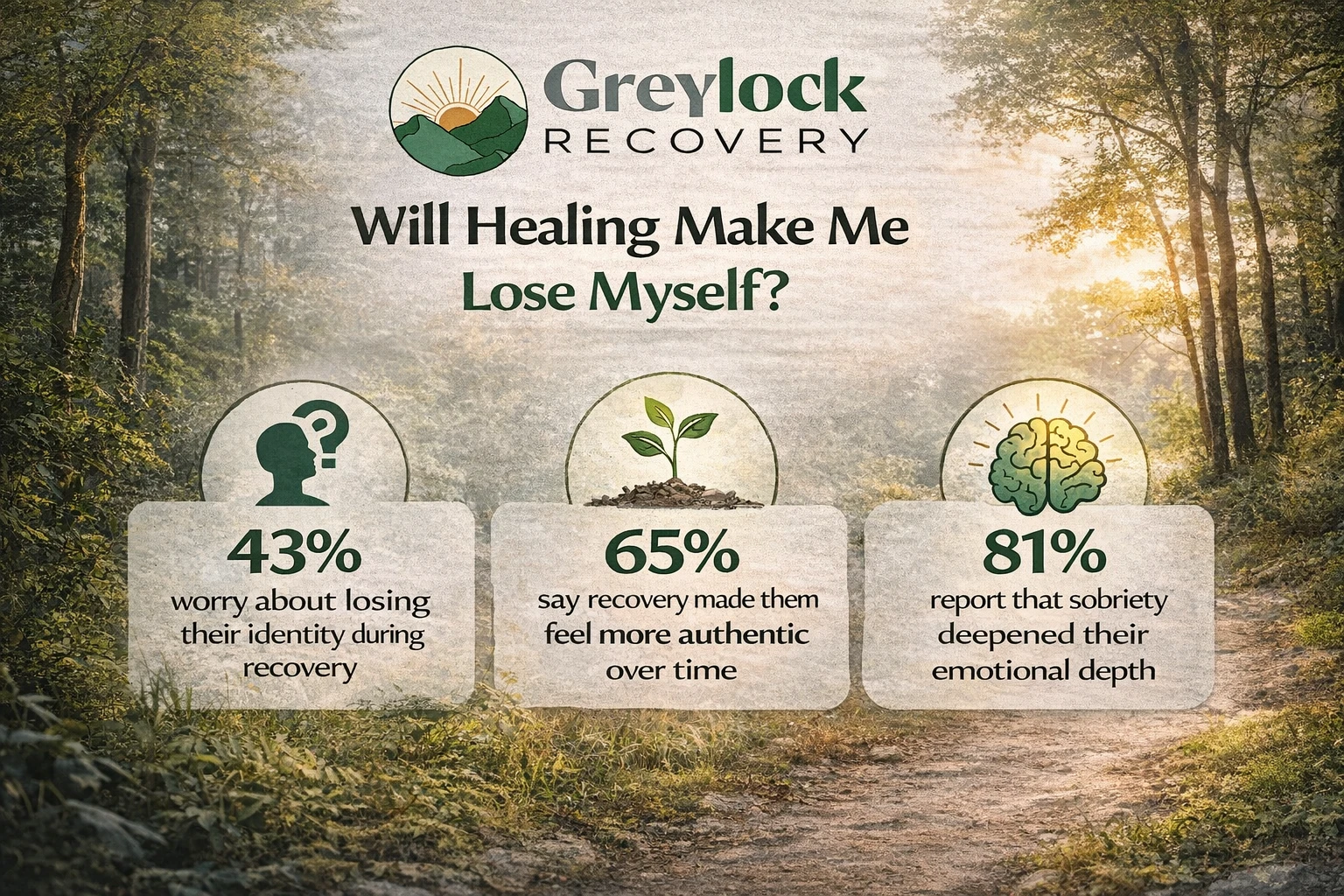
Emotional Depth Doesn’t Go Away
Another fear many people carry is that healing will erase emotional intensity.
If you’ve always felt things deeply, that concern makes sense.
But recovery doesn’t remove emotional depth.
What it often removes is emotional chaos.
There’s a difference.
Chaos makes emotions overwhelming.
Depth allows emotions to be understood and expressed.
When the brain stabilizes, emotions don’t disappear—they become easier to navigate.
And for many people, that leads to more meaningful creative expression, not less.
A Different Kind of Freedom
Addiction often creates the illusion of freedom.
In reality, it narrows choices.
Decisions revolve around substances—finding them, using them, recovering from them.
Healing begins to widen those choices again.
People start deciding how they want to spend their time, energy, and attention.
They begin rediscovering the freedom to explore ideas, relationships, and personal interests without being pulled in a single direction.
That freedom can feel unfamiliar at first.
But over time, it becomes one of the most powerful parts of recovery.
The Stories We Hear From People Who Were Afraid
At Greylock Recovery, we often meet people who carry this exact fear.
They worry that recovery will take away the parts of themselves that feel vibrant and unique.
Months later, many describe a different experience.
They talk about finishing creative work they started years earlier.
They talk about relationships that feel real again.
They talk about waking up with energy and curiosity instead of exhaustion.
One person once told our team something we still repeat to others:
“I thought recovery would make me less interesting. Instead it made my life bigger.”
Those stories aren’t unusual.
They’re part of what healing often looks like.
If You’re Standing at the Edge of Change
If the idea of healing scares you because you’re afraid of losing yourself, that fear is valid.
Identity matters.
Creativity matters.
The way you experience the world matters.
Recovery isn’t about flattening those things.
It’s about stabilizing the parts of life that addiction has disrupted so the rest of you can grow again.
The person you are doesn’t disappear.
More often, they finally get room to exist.
Frequently Asked Questions
Will recovery make me lose my creativity?
Many people worry about this, especially artists and creative professionals. In reality, many find their creativity becomes more consistent and focused when addiction is no longer disrupting their thinking or energy.
Does medication in recovery make people feel numb?
The goal of medication support is stability, not emotional suppression. Many individuals report feeling more balanced and clear-headed rather than numb.
What if substances feel like part of my identity?
That experience is very common. Over time, habits and environments can shape identity in powerful ways. Recovery often helps people rediscover who they are beyond those patterns.
Can you still experience strong emotions in recovery?
Yes. Recovery does not remove emotional depth. Instead, it often helps people understand and manage emotions in healthier ways.
How long does it take to feel like yourself again?
Everyone’s timeline is different. Some people begin noticing mental clarity within weeks, while deeper emotional and lifestyle changes may take longer. Recovery is a gradual process of rebuilding stability.
What if I’m not sure I’m ready for recovery?
Uncertainty is normal. Many people begin by simply learning about their options and talking with professionals who understand addiction and recovery. Taking that first step doesn’t require committing to everything at once.
If you’re curious about recovery options that support stability while protecting your sense of identity, help is available. Call (413) 8486013 to learn more about our treatment services, medication assisted services in Williamstown, Massachusetts.