
When you’re newly sober, even a single day can feel endless. Time stretches in unfamiliar ways—especially when you’re away from everything and everyone you know. Meals feel quiet. Nights feel long. And the question surfaces: How long am I going to be here?
It’s a deeply human question. Not just about logistics—but about hope, about fear, about whether the ache inside is something that time can actually touch.
If you’re wondering how long people typically stay in residential treatment, you’re not alone. Whether you’re thinking about starting or you’ve just arrived and feel like a ghost in someone else’s room, this blog is for you.
Let’s talk gently, truthfully, and without pressure—about what “long enough” really means when your life is just starting to mend.
Why Is the Length of Stay So Hard to Pin Down?
Because healing doesn’t follow a calendar.
You don’t heal on a deadline—and your pain didn’t start on one, either. Some people come into treatment ready to start trusting others again. Others arrive feeling hollow and scared to speak. Both are valid. Both deserve time.
When someone asks, “How long will I be here?”—the real question underneath is often, “Will this actually help me?”
And the truth is: time is part of it. But it’s not the only thing. Length of stay depends on:
- The substances involved and how long they were used
- Whether you’re facing co-occurring mental health conditions
- How physically stable you are
- Your emotional safety and support system
- What level of care is appropriate next (PHP, IOP, sober living, etc.)
Think of residential treatment like putting a cracked bone in a cast. You wouldn’t take it off after three days just because the pain went down. Healing needs a safe container—and that container needs enough time to hold.
What’s the Average Stay in Residential Treatment?
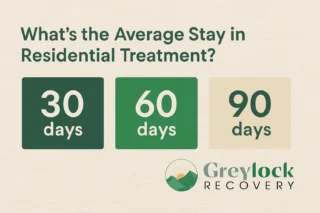
The most common length of stay is 30 to 90 days—but averages only tell part of the story.
At Greylock Recovery, most clients begin with a 30-day plan. This gives people time to detox if needed, settle into a new routine, and begin engaging in individual and group therapy.
But for many, 30 days is just the beginning. Clients facing trauma, chronic relapse, dual diagnoses, or unstable housing may extend to 60 or even 90 days. Not because they’re “failing”—but because they’re finally safe enough to dig deeper.
Sometimes, healing moves in layers:
- Week 1–2: Your body stabilizes. You feel exhausted but slightly clearer.
- Week 3–4: Emotions start surfacing. You begin noticing patterns, pain, and possibilities.
- Weeks 5–8: Trust builds. Therapy deepens. You gain more language for your story.
- Weeks 9+: You start imagining a future that doesn’t just include staying sober—but being whole.
That kind of growth takes more than a month for many people. And it’s okay if that includes you.
Is Longer Always Better?
Not always. But sometimes, it’s necessary.
There’s a common myth in recovery: that the longer you stay, the more “serious” your problem must be. That’s not only untrue—it’s unhelpful.
Staying longer in treatment is not a reflection of how broken you are. It’s a reflection of how deeply you’re choosing to care for yourself.
That said, longer stays aren’t automatically better. What makes treatment effective is:
- Feeling emotionally safe
- Being able to engage honestly in therapy
- Connecting with peers and staff
- Receiving care that addresses your whole story—not just your substance use
Still, there’s research that shows people who remain engaged in some level of care for 90 days or more have better long-term outcomes. That doesn’t always mean 90 days residential—but it could mean 30 days inpatient followed by PHP, then IOP or sober living.
What matters most is finding a rhythm that supports your emotional and physical recovery—not rushing toward the door because you’re tired of missing home.
Will I Be Forced to Stay?
No. And the best treatment centers wouldn’t want you to be.
Residential treatment is voluntary. You are never trapped. You are not held against your will. You always have a choice.
At Greylock Recovery, we don’t operate from fear or force. We believe healing begins with consent and collaboration. That means:
- You’ll be part of every decision about your care plan
- If something doesn’t feel right, you can say so
- Your team will walk with you, not ahead of you
It’s normal to feel like leaving at some point. Homesickness is real. So is doubt. But if you feel the urge to walk out, know this: you won’t be shamed for it. You’ll be asked about it—with care, not control.
We’re not here to police you. We’re here to support the version of you that wants to stay.
What Happens If I Want to Leave Early?
First: you’ll be heard.
Not judged. Not talked down to. Not guilted.
Wanting to leave early doesn’t mean you’re weak. It means something inside feels too loud, too raw, too unfamiliar. And that’s worth listening to.
Maybe you’re afraid this isn’t helping. Maybe you’re overwhelmed by emotions you’ve numbed for years. Maybe it’s just that being here makes you feel more alone than you ever expected.
All of that is valid. None of that is a reason to give up.
When clients at Greylock feel the urge to leave, we pause and ask:
- What are you hoping will change by leaving?
- What’s hurting most right now?
- What would make staying feel safer or more doable?
Sometimes the answer is simple: a change in roommate, more family contact, or adjusting the therapy schedule. Other times, it’s deeper—and we explore that with you, gently.
If you do decide to leave early, we won’t close the door behind you. Our hope is always to see you again, when you’re ready.
Can I Extend My Stay If I Need More Time?
Yes. And we encourage it when it feels right.
You don’t have to decide everything on Day 1. In fact, we don’t recommend it. The early days of treatment are often foggy. Your nervous system is adjusting. Your body is healing. Your emotions may be barely thawed.
Some people start with 30 days and, halfway through, realize they’re just beginning to feel safe. Others discover trauma or grief they never gave themselves permission to face before.
When that happens, we talk. We check in on progress. We look at insurance. We collaborate. And if it makes sense—you stay.
Staying longer is never a punishment. It’s a gift you give yourself: the gift of time.
What If I Still Feel Lonely in Treatment?
Here’s a quiet truth we don’t say often enough: recovery can feel lonelier before it feels better.
In your first few weeks, the noise of addiction fades—but it leaves an echo. That echo sounds like silence, like aching, like wondering if you’ll ever feel normal again.
You might be in group therapy with ten other people and still feel like the odd one out. You might get a supportive letter from family and still feel forgotten. That doesn’t mean something is wrong with you. It means you’re in the in-between.
Loneliness in early recovery is not a sign that treatment isn’t working. It’s a sign that your defenses are coming down—and your heart is starting to feel again.
You’re not doing it wrong.
In fact, you’re doing one of the bravest things there is: staying in the room, even when it’s quiet.
At Greylock, we hold space for that ache. We help you name it. We invite you to sit with it—not to fix it overnight, but to recognize that healing is relational. You don’t have to “get over” your loneliness. But you also don’t have to carry it alone.
Can My Length of Stay Change If I Move into PHP or IOP?
Yes—and that’s often the next step.
Many clients transition from residential treatment into partial hospitalization (PHP) or intensive outpatient (IOP) care. These programs allow you to continue building structure, therapy, and peer support—while gradually reintegrating into everyday life.
Some people think of residential as the “deep breath.” PHP and IOP are the “next steps”—where you begin walking again.
You can learn more about what those levels of care look like by exploring Greylock’s full addiction recovery program offerings.
Still wondering if residential treatment is right for you?
Call us at (413) 848-6013 or visit our Residential Treatment program page to learn more about how we support healing at every pace. Whether you need 30 days, 60, or something in between—we’ll meet you where you are. Always.