
I didn’t tell anyone at first.
Not when I started slipping.
Not when it turned into using again.
And definitely not when the thought crossed my mind:
I think I need to go back.
Because going back didn’t feel like a step forward.
It felt like erasing everything I had already done.
And if you’ve been there, you know—that thought alone can keep you stuck longer than the relapse itself.
I Kept Trying to “Fix It Quietly”
At first, I told myself it was temporary.
Just a slip.
Just a rough patch.
Just something I could correct on my own.
I leaned on what I had learned before. Tried to recreate the structure. Repeated things I had heard in groups.
But something was different this time.
It didn’t hold.
Not because I didn’t care.
Not because I didn’t try.
But because I was trying to rebuild something alone that was never meant to be held alone.
And that’s a hard thing to admit.
The Part That Hurt Wasn’t the Relapse—It Was the Meaning I Gave It
Relapse came with a story.
Not just “this happened.”
But “this means something about me.”
I told myself:
- You had your chance.
- You should’ve known better.
- Other people make this work. Why can’t you?
And those thoughts didn’t just sit there.
They shaped what I did next.
They kept me quiet.
They kept me isolated.
They made going back feel like something I didn’t deserve.
I Thought Going Back Meant Admitting I Wasn’t Capable
That was the belief underneath everything.
If I go back, it means:
- I couldn’t do it
- I didn’t take it seriously
- I’m one of the people this just doesn’t work for
So instead of reaching out, I waited.
Tried to “get it together” on my own.
But the longer I waited, the harder it got.
Because I wasn’t just dealing with substance use anymore.
I was dealing with shame, avoidance, and the pressure of trying to fix everything without support.
The Moment It Shifted
There wasn’t a big wake-up call.
No dramatic event.
Just a quiet moment where I realized:
I know where this goes if I keep pretending I’ve got this.
And for the first time, the idea of going back didn’t feel like failure.
It felt like relief.
Not easy relief.
But honest relief.
Walking Back In Felt Like Being Seen All Over Again
I wish I could say it was comfortable.
It wasn’t.
Walking back into care, I felt exposed in a way that’s hard to explain.
Like everyone could see the story I had been telling myself:
They’re back. It didn’t work.
But something unexpected happened.
No one treated me like I failed.
They treated me like someone who came back before things got worse.
And that changed how I saw myself.
I Didn’t Start Over—But I Did Start Differently
The biggest difference the second time wasn’t the setting.
It was how I showed up.
The first time, I was trying to do recovery right.
Say the right things.
Understand everything quickly.
Prove I could handle it.
The second time, I stopped performing.
I got honest about:
- What I didn’t understand yet
- Where I still felt unstable
- How quickly I slipped when I didn’t have support
And instead of rushing through it, I stayed in it.
That’s where things actually started to stick.
I Needed More Than Insight—I Needed Something That Held Me
The first time gave me awareness.
But awareness didn’t carry me when things got hard.
The second time gave me structure.
Consistency.
Support that didn’t disappear at the end of the day.
A space where I didn’t have to make every decision alone.
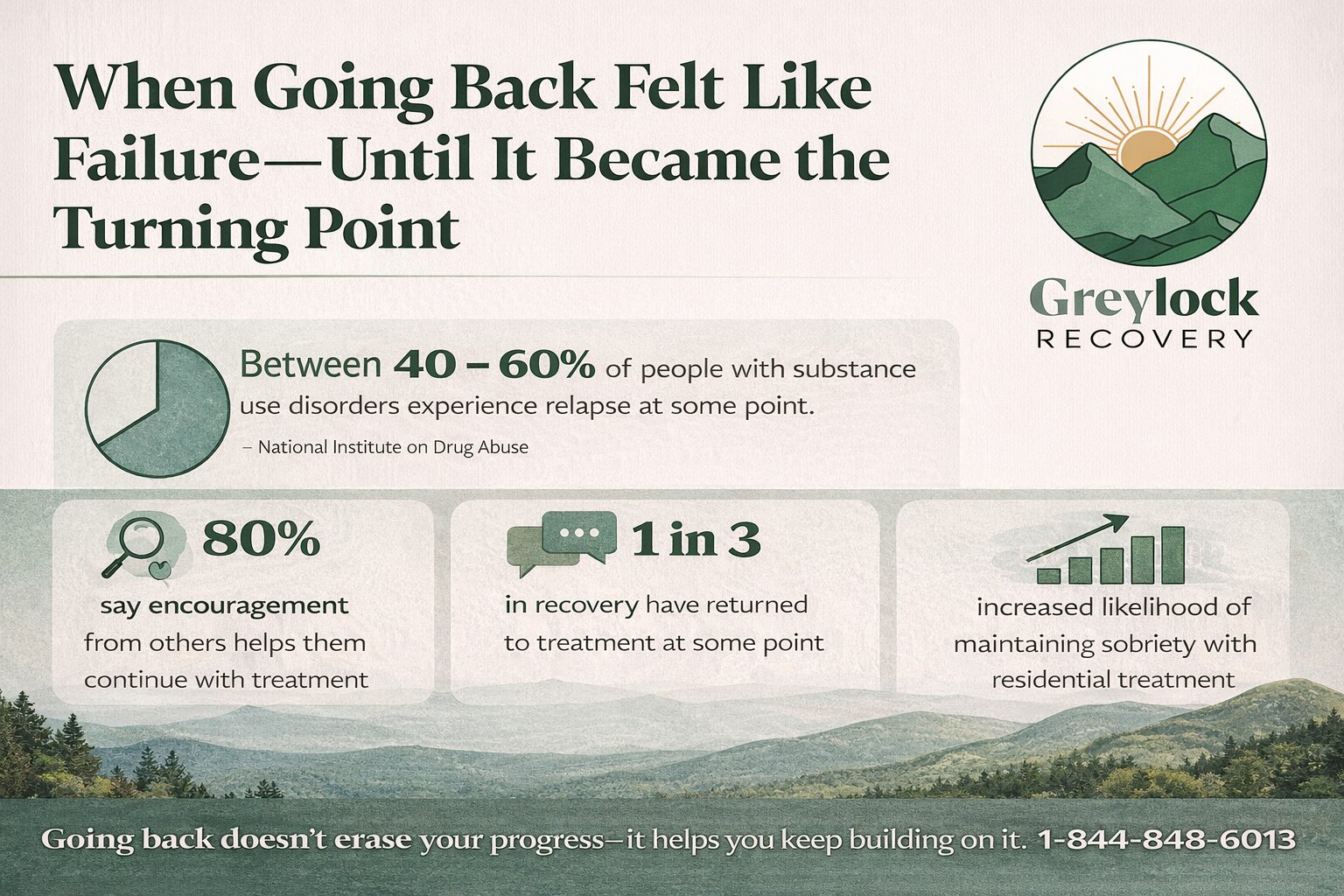
That’s where something like residential addiction treatment can change things—not because it fixes you, but because it holds you steady long enough to actually build something sustainable.
And for me, that stability was the missing piece.
The Hardest Truth: I Was Still Trying to Do It My Way
This part took the longest to admit.
I wanted recovery—but on my terms.
I wanted to feel better without fully letting go of the ways I had always coped.
I wanted structure—but only when it was convenient.
And that tension kept pulling me back.
The second time, I stopped negotiating with myself.
Not perfectly. But honestly.
And that honesty made space for something real.
What Started to Change (Slowly, Then All at Once)
It didn’t happen overnight.
There was no single moment where everything clicked.
But over time:
- My reactions slowed down
- My thinking felt clearer
- I stopped feeling like I was constantly on edge
Life didn’t suddenly become easy.
But it became manageable.
And that’s something I didn’t realize I had been missing.
The Part I Wish Someone Had Told Me
Going back isn’t a step backward.
It’s a step deeper.
You don’t lose what you learned.
You bring it with you.
The clarity.
The awareness.
The glimpses of who you can be.
This time, you just have more support to hold onto it.
If You’re Sitting With the Same Decision
If part of you is thinking about going back, I already know what the other part is saying:
You shouldn’t have to.
You already did this.
You’re better than this.
But what if this isn’t about “should”?
What if it’s about what you actually need right now?
Not what you needed before.
Not what you hoped would be enough.
What you need now.
You’re Not the Only One Who Came Back
I used to think coming back meant I was different in a bad way.
Now I see it differently.
A lot of people who are steady now have a chapter where they returned.
Not because they failed.
Because they stayed in it long enough to figure out what actually worked for them.
And that’s a different kind of strength.
FAQ: The Questions That Show Up When You’re Thinking About Going Back
Does going back mean I messed everything up?
No. It means you recognized that what you had wasn’t enough to support you right now. That’s awareness, not failure.
Will I lose all the progress I made?
You won’t. Everything you learned comes with you. This time, you’re building on it—not replacing it.
What if I feel ashamed walking back in?
That’s normal. But you’ll quickly see you’re not the only one who’s been there. And that changes how it feels.
How do I know if I need more support?
If you’re trying to manage things on your own and it’s not holding, that’s a sign. You don’t have to wait for things to get worse.
Is it worth doing again?
Yes. Because you’re not the same person you were the first time. You’re coming back with insight—and that changes everything.
Going Back Was the Hardest Decision I Made
Because it forced me to face the truth.
Not the version of me I wanted to be.
Not the version I thought I should be.
The version that needed more support.
And somehow—that ended up being the best decision I made.
Call 413-848-6013 or visit our residential addiction treatment services to learn more about our addiction recovery programs, residential addiction treatment services in Williamstown, Massachusetts.
You didn’t lose your progress.
You just found the part of recovery that asks for a little more honesty.
And that’s where things can actually change.