

If you’re reading this, you might not be sure if you need help. You might not even call what you’re doing “addiction.” Maybe you’re just tired—of waking up groggy, of wondering if this is becoming a problem, of asking yourself if you could go a few days without it… and quietly knowing the answer.
This is the space many people stand in before they take the first step toward sobriety. It’s not a dramatic breakdown. It’s a quiet shift. A curiosity. A question that won’t leave you alone.
A detox program isn’t just for people at rock bottom. It’s for people ready to try something different. You don’t need to crash to begin again—you just need to want clarity. Below, we answer the most common questions we hear from people who are sober curious but unsure where to begin.
What Is a Detox Program, Really?
A detox program is a short-term medical and therapeutic setting where you can safely stop using alcohol or drugs under professional care. It’s not a lifetime commitment. It’s a beginning.
The goal of detox is to clear substances from your system with the right balance of support, symptom relief, and emotional safety. Depending on the substance and your health history, withdrawal can be mild or intense—either way, detox ensures you don’t have to navigate it alone.
At Greylock Recovery in Williamstown, Massachusetts, detox is grounded in compassion, not judgment. It’s private, calm, and tailored to you.
Do I Need to Be “Addicted” to Go to Detox?
Not at all.
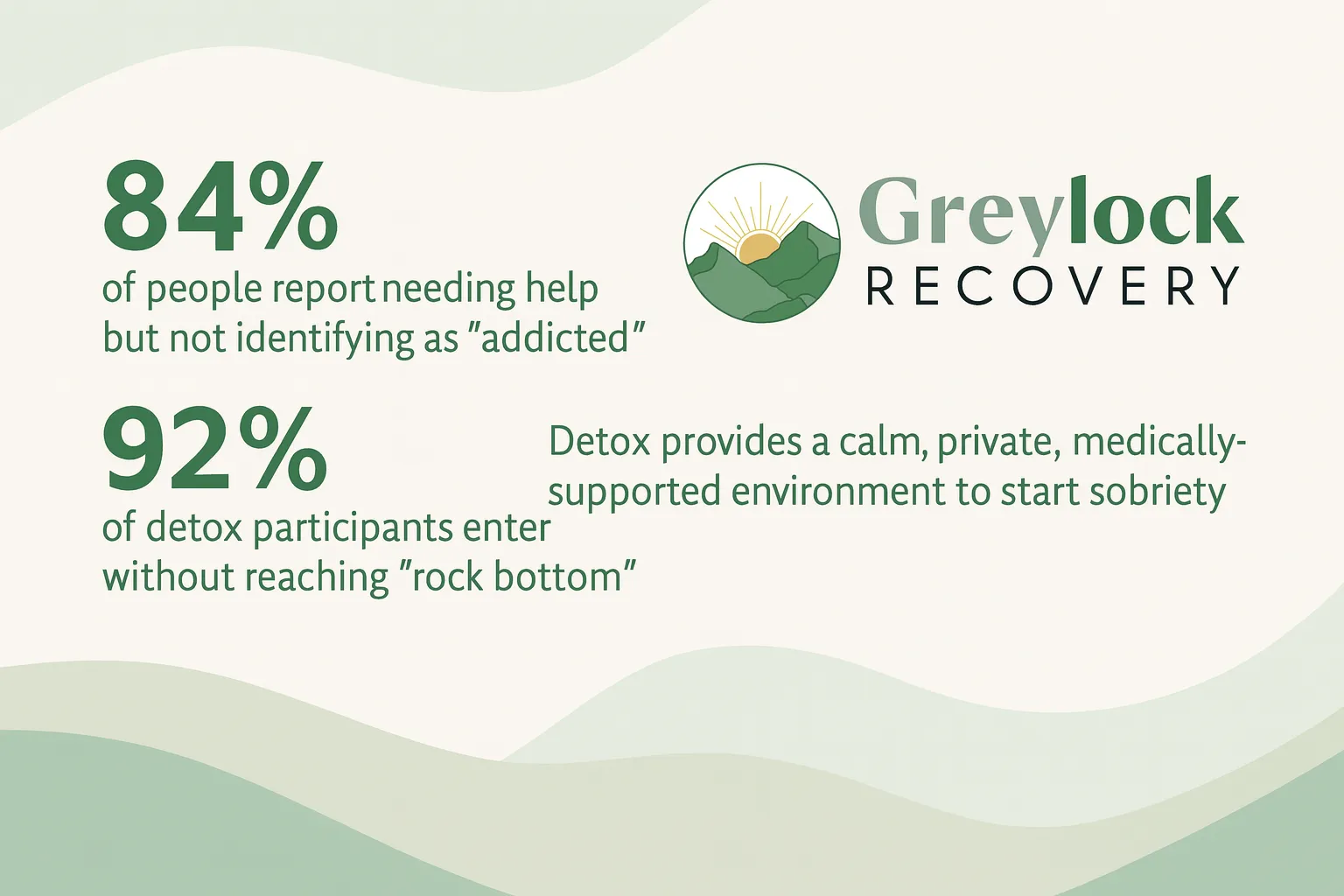
The idea that detox is only for people in total crisis is outdated and unhelpful. If you’re thinking, “I drink more than I want to,” or “I can’t stop for more than a few days without feeling anxious or sick,” that’s reason enough.
Detox is about interruption. It gives your body and brain a chance to reset. You don’t have to wait for a dramatic collapse to ask for help. You’re allowed to seek clarity even if no one else thinks you “look like someone with a problem.”
What Substances Usually Require Detox?
We most often see people seeking detox from:
- Alcohol
- Benzodiazepines (like Xanax, Ativan, Klonopin)
- Opiates and opioids (like heroin, oxycodone, fentanyl)
- Stimulants (methamphetamine, cocaine)
Some substances—like alcohol and benzos—can have dangerous withdrawal symptoms if stopped suddenly. That’s where medical support becomes essential. Detox ensures safety, but more importantly, it offers care while your system recalibrates.
What Happens During Detox at Greylock?
Here’s what you can expect in our detox program:
- Clinical Assessment – You’ll meet with a medical provider who will ask about your health, substance use, and goals. This helps shape a personalized plan.
- Medical Monitoring – You’ll be safely monitored around the clock for vital signs, comfort, and stability. Medications may be used to ease symptoms.
- Private, Peaceful Environment – We offer a calm setting in the Berkshires where you can truly rest.
- Emotional Support – You’ll have access to counselors and staff trained to meet you with compassion, not pressure.
- Planning for What’s Next – Detox isn’t the end—it’s a starting point. We’ll talk about what’s possible after, whether that’s therapy, outpatient treatment, or simply more clarity.
You’ll never be pushed. Just supported.
What If I Change My Mind Midway Through?
This is your process. You can ask to speak to someone at any time. If you’re unsure about continuing, we’ll listen without judgment and help you think through your options.
Some people come to detox feeling hesitant or even ambivalent about staying sober long-term. That’s normal. We work with where you’re at—not where someone else thinks you should be.
Is Detox Scary or Painful?
Many people fear withdrawal—but what they really fear is suffering alone.
In detox, you’ll be monitored, medicated if appropriate, and supported throughout. Symptoms can include:
- Sweating, nausea, or headaches
- Sleep problems
- Anxiety or mood swings
- Cravings
At Greylock, our job is to make detox as safe and manageable as possible. Most people say the emotional relief of not doing it alone outweighs the physical discomfort.
Can I Bring My Phone or Talk to Loved Ones?
We understand connection matters. Depending on your plan, you may be allowed phone access during scheduled times. Loved ones can also receive updates with your permission.
Detox is about healing, but it doesn’t have to feel like isolation.
Will I Be Forced Into Rehab After Detox?
Nope.
We’ll recommend what we think might help—but you get to decide what’s next. Detox is a separate level of care. Some people go straight into residential or outpatient treatment. Others return home with a better understanding of their relationship with substances.
We’ll walk you through your options, but we won’t push. Your autonomy matters here.
Can I Just Detox at Home?
Some people try—and some succeed. But for substances like alcohol, benzos, or opioids, quitting cold turkey can be dangerous. Even life-threatening.
Detox at home often leads to stopping and starting repeatedly, which increases health risks and discouragement. A medical detox ensures safety—but also emotional steadiness, which is just as critical.
What If I Have a Job, Kids, or Can’t Disappear?
We work with adults who have lives. We get it—stepping away feels impossible.
But think of detox as a short-term investment in long-term clarity. It’s often 3–7 days. Some people take medical leave, vacation days, or coordinate family support for just long enough to breathe and regroup.
We’ll help you explore realistic options that don’t blow up your world.
What If I’m Not Ready to Quit Forever?
That’s okay.
You don’t need to commit to forever to start a detox program. You just need to be curious about what life might feel like with a little less fog—and a little more you.
We’ve worked with people who didn’t know if they wanted full sobriety. Detox gave them a window of clarity to figure that out—no pressure.
Can You Share a Real Story?
Here’s one from a client, shared with permission:
“I didn’t crash my car. I didn’t lose my job. But I lost my spark. I knew I was numbing. Detox felt scary, but it was the first time I slept through the night in years. I didn’t commit to sobriety right away, but that experience gave me the space to even consider it.”
— Detox Client, 2023
That’s the power of beginning. It doesn’t have to be dramatic to be meaningful.
Is Greylock’s Detox Program LGBTQ+ Friendly?
Yes.
We welcome people of all identities and backgrounds. We understand how substance use and identity can intersect in complicated ways, and we strive to create a respectful, inclusive space for healing.
What Should I Pack?
Bring:
- Comfortable clothes
- Toiletries (nothing with alcohol in the ingredients)
- Reading materials or journals
- A small personal item that brings you comfort
We’ll provide a full list and help you feel prepared.
Can I Talk to Someone Before I Decide?
Yes, always.
You can reach out just to talk. No commitment. No pressure. Just a real conversation with a human being who gets it.
Call us. Message us. Ask your questions. Curiosity is not weakness—it’s wisdom.
Still unsure, but ready to ask your first question?
Call (413) 848-6013 or visit Greylock Recovery’s Detox Program page to learn more. Whether you’re ready to start—or just want to stop wondering alone—we’ll meet you with care and clarity. You don’t need a label to be worth helping.