

I’ve been sober for years. I’ve rebuilt my life, brick by brick—career, relationships, even trust in myself.
But lately, something’s been missing. Not the way things were before treatment—chaotic and terrifying—but a quieter kind of ache. Like my life still works… it just doesn’t feel like mine.
I know I’m not alone in this. I’ve heard it from others: long-term sobriety that starts to feel like going through the motions. Grateful, yes. But also… flat. Disconnected.
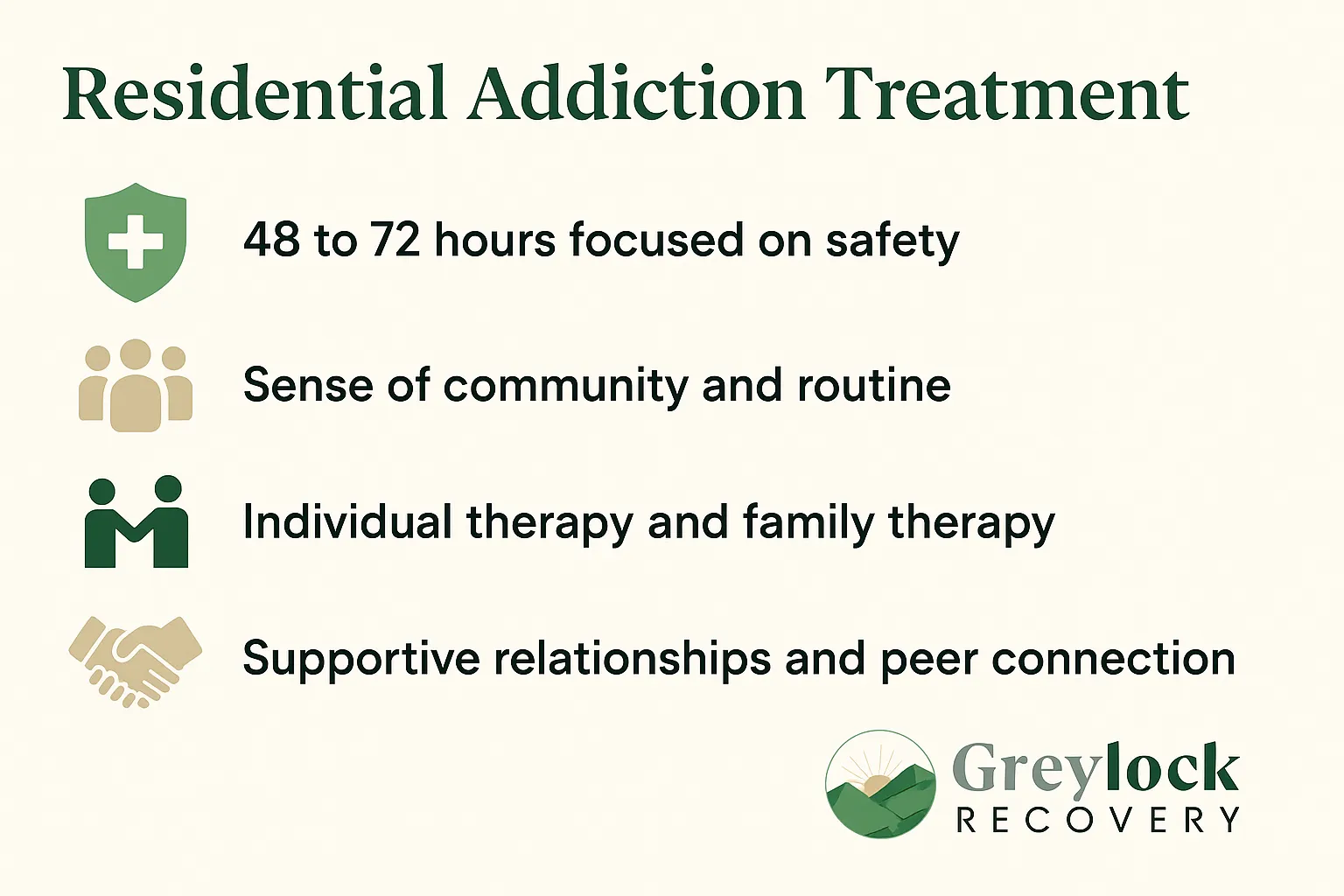
When that feeling creeps in, I find myself remembering where it all started. Greylock’s Residential Addiction Treatment program in Williamstown, Massachusetts. That place became my first home in recovery. And years later, it still anchors me—especially in seasons like this.
I Wasn’t Rock Bottom. I Was Hollow.
I didn’t show up to treatment with dramatic consequences. I hadn’t lost my job. I wasn’t homeless. But I was emotionally bankrupt.
Everything looked fine from the outside. Inside, I was burned out, closed off, and painfully tired of pretending I was okay.
I didn’t think I needed “residential addiction treatment.” I thought I needed more discipline, more gratitude, more anything-but-help. But Greylock offered something I didn’t know I needed:
A place to not perform.
A place to be scared.
A place where honesty wasn’t punished or pushed away.
That was the start of everything for me.
The Early Days Weren’t Comfortable—They Were Necessary
I remember thinking I’d breeze through the first week. After all, I was “high-functioning.” I figured I’d just take a break and get back to normal life with a fresh mindset.
Instead, I got still. Which was terrifying at first.
No distractions. No work emails. No caretaking for everyone else. Just me, my patterns, and the uncomfortable truth that I had no idea what it felt like to be emotionally safe.
But the routine helped. Mornings were calm. Meals were consistent. Groups were awkward until they weren’t. The longer I stayed, the more I softened. I stopped trying to impress. I started listening.
That’s when healing began—not with a big revelation, but with space. Space to breathe. To be.
I Learned How to Stay With Myself—Not Run
Treatment taught me more than how to avoid relapse. It taught me how to stay with discomfort.
I learned how to notice when I was about to check out emotionally—scrolling, numbing, isolating. I learned to name it. To stay with it, even when everything in me wanted to disappear.
I left Greylock with a toolbox, not just a to-do list. I learned how to build a recovery that wasn’t about performance, but about presence. One that made space for grief, joy, anger, and even boredom.
Long-Term Sobriety Isn’t Always Bright—Sometimes It’s Dim and Drifting
Fast forward a few years. I’m still sober. Still working. Still “doing the deal,” at least from the outside.
But the fire’s gone out.
I don’t crave substances—I crave aliveness. The sense that I’m actually connected to what I’m doing. To my people. To myself.
Somewhere along the way, maintenance took over. The habits are still there—meetings, morning routines, checking in with supports—but they’ve lost their spark. Like recovery became another checklist.
That’s when I started revisiting my memories of Greylock. Not out of nostalgia—but as a reminder of what it felt like to be truly held. Truly seen. Truly alive in my own recovery.
What Greylock Means to Me Now—Years Later
I used to think residential treatment was a one-time thing. A launchpad. A starting line.
But now I see it as something deeper: a root system.
It was the first place I learned:
- I don’t have to be productive to be worthy.
- I’m allowed to rest before I burn out.
- Connection isn’t earned—it’s given, offered, available.
I carry those truths with me. And when I forget them—as I sometimes do—I remember that I have a place I can reach back to. Whether I need a reset, a reconnection, or just a reminder of who I became when I stopped running.
You Don’t Have to Be Falling Apart to Reach Back Out
To the other alumni reading this—especially those who’ve been sober for a while but feel emotionally flat—let me say this:
You’re not doing it wrong. You’re just tired. Or drifting. Or quietly wondering if there’s more.
And there is.
Greylock isn’t just for emergencies. It’s not just for relapses or day-one detoxes. It’s for real humans navigating a lifelong relationship with sobriety, with themselves, with aliveness.
If something in you is nudging you to reconnect—to check in, to come back for a visit, to reach out—listen. That’s not weakness. That’s wisdom.
FAQs: Long-Term Sobriety and Residential Treatment
Is it common to feel flat or disconnected after years in recovery?
Yes. Many people experience emotional plateaus or a loss of meaning after long-term sobriety. This doesn’t mean your recovery is failing—it means it’s evolving. Checking in or returning to a supportive setting like Greylock can reignite your connection to what matters.
Do I have to be actively using to return to residential treatment?
Not at all. Many clients return for a tune-up, deeper emotional work, or to process something new. Sobriety is not a requirement—openness is.
What if I feel guilty for needing help again?
Guilt is common, but it’s not necessary. Needing support doesn’t erase your progress. In fact, it honors it. Long-term recovery often includes cycles of reengagement—and that’s healthy.
How does Greylock support long-term alumni?
Greylock offers alumni engagement, supportive outreach, and re-entry opportunities. Whether you want to talk to a clinician, reenter for a short stay, or just reconnect with peers, the door is always open.
What should I do if I’m not sure what I need, but I know I feel off?
Start small. Reach out. Talk to someone who remembers your journey. You don’t have to have a plan to begin. Just start the conversation.
Still Sober, But Feeling Stuck? Let’s Reconnect.
If long-term recovery feels flat and you’re craving reconnection, you’re not alone. Call (413) 848-6013 or visit Residential Addiction Treatment Program in Williamstown, Massachusetts to talk with someone who remembers how you started—and can help you rediscover what matters now. Recovery evolves. And so can your support.