
When your child is in crisis, every part of your world goes blurry.
You try to be strong. You try not to fall apart. But in the quiet moments—after a scary call, after another sleepless night—it hits: I don’t know what to do anymore.
Choosing residential addiction treatment might feel like a last resort. But for many families, it becomes the first real moment of clarity in months. This blog isn’t here to convince you. It’s here to walk you through what care actually looks like, so you can make decisions with a little less fear—and a little more information.
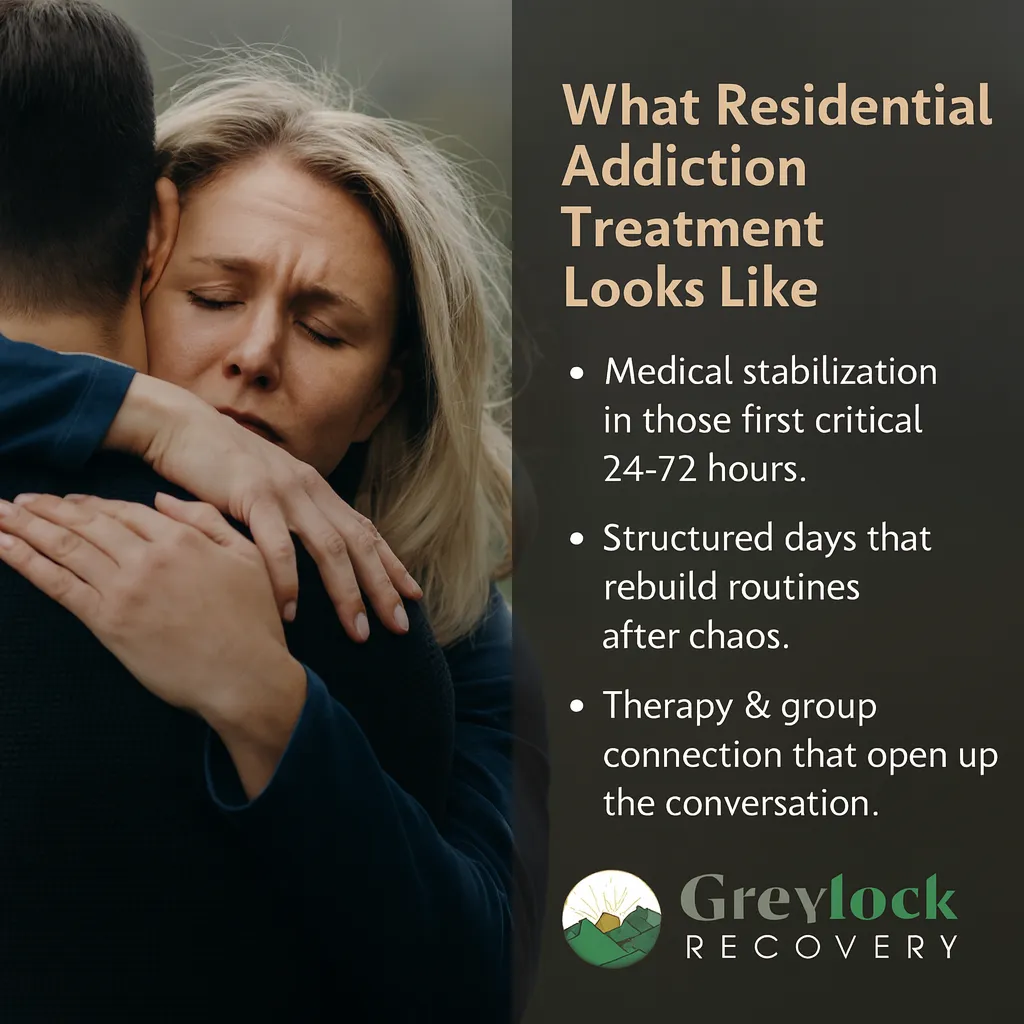
The First Step: Stabilizing a Storm
When your loved one enters a residential treatment center like Greylock Recovery in Williamstown, Massachusetts, the first goal isn’t to “fix” anything. It’s to slow the storm.
The first 48 to 72 hours are about:
- Medical safety (including withdrawal monitoring if needed)
- Emotional stabilization
- Connection to staff and environment
They may meet with a nurse, a therapist, a case manager—all before their first formal group. The tone is quiet, steady. No one is rushed. No one is expected to trust right away.
For many parents, the relief begins here. Just knowing your child is somewhere safe, under watchful and experienced care, can take a massive weight off your chest.
Routine Isn’t Control. It’s Calm.
One thing that surprises many families is how much routine helps.
After weeks—or years—of chaos, many young adults find the predictable rhythm of residential treatment strangely comforting. At first, they might resist it. But over time, that structure becomes something they rely on.
Here’s what a typical day might look like:
- 7:30am: Wake-up and morning check-in
- 8:00am: Breakfast
- 9:00am: Group therapy
- 10:30am: Psychoeducation or mindfulness
- 12:00pm: Lunch and break
- 1:00pm: Individual therapy or case management
- 2:00pm: Life skills, art, or movement-based groups
- 5:00pm: Dinner
- 6:00pm: Community reflection or peer support group
- 9:00pm: Wind down, quiet hours
It’s not a bootcamp. It’s a container—holding your loved one while they begin to find themselves again.
Clinical Care That Sees the Whole Person
At Greylock, therapy isn’t just a session—it’s a relationship. Our clinicians take time to understand not just what your child has been through, but how they make sense of it.
That might include:
- Individual therapy grounded in trauma-informed care
- Group therapy to build trust and communication
- Family therapy (offered virtually and in person)
- Co-occurring support for mental health diagnoses like depression, anxiety, or bipolar disorder
No two treatment plans are exactly alike. Our team adjusts based on what actually helps—not what looks good on paper.
We also pay close attention to developmental needs. A 22-year-old struggling with addiction and emotional regulation needs different support than a 45-year-old in recovery. We meet people where they are, not where they “should” be.
Healing Happens in Connection, Not Isolation
It’s normal for parents to worry: Will my child feel alone in there?
But isolation is often what people bring into treatment—not what they find there.
In residential care, your child will likely meet others who’ve struggled in ways they didn’t think anyone else understood. Sometimes, the first time someone truly opens up is not in therapy—but in a quiet conversation after group, or over coffee in the lounge.
We’ve seen young adults who refused to speak during intake end up leading a group with compassion and strength weeks later. That shift happens through human connection—not pressure.
Your Role as a Parent: Still Important, Still Needed
You might feel like you’re on the outside now. But you’re not.
At Greylock, family isn’t forgotten. You’ll be invited to:
- Join family therapy sessions to process communication patterns, pain, and healing
- Attend education sessions about addiction, enabling, and recovery
- Receive updates from the care team about progress and challenges
- Get aftercare planning support to help navigate next steps
You don’t have to have the answers. You don’t have to “fix it.” You just have to stay willing to walk beside them—especially once they begin walking forward.
The End of Treatment Isn’t the End of Support
No one finishes a 30-day program and “graduates” into perfection. That’s not how real life—or recovery—works.
Discharge is carefully planned and collaborative. Our staff helps your loved one explore:
- Whether they need a step-down program, like intensive outpatient (IOP)
- If sober living or structured housing is appropriate
- Ongoing therapy and medication management
- A relapse prevention plan rooted in real-world coping skills
And you’ll be part of that process too. Families are often looped in during aftercare planning so transitions feel supported—not sudden.
At Greylock, we see discharge as a handoff—not a goodbye.
What Makes Greylock Different?
We’re a small, focused team with a clear priority: individualized, emotionally attuned care.
Here’s what families tell us sets Greylock apart:
- Small group sizes, which allow for deeper relationships
- A trauma-informed approach that avoids shaming and “tough love”
- A beautiful, peaceful environment in Williamstown, Massachusetts that helps people settle and focus
- An emphasis on long-term healing, not just short-term behavior change
Our goal isn’t to churn people through a program. It’s to create enough safety that something inside begins to shift—for real.
And we take that seriously.
Real Words from Families We’ve Helped
“We were so scared to send our son to treatment. But they called us after his first week just to say he was laughing again. That was the first time I cried from relief in years.”
– Parent, 2023
“They didn’t give up on my daughter when she tried to leave on day three. They stayed with her, gently, until she was ready to stay. I don’t know where we’d be if they hadn’t.”
– Mother of a 19-year-old
FAQs: What Parents Ask Most About Residential Addiction Treatment
Will my child hate me for sending them?
Not likely. Many young adults feel some resistance at first, but that often shifts quickly once they feel seen and safe. You’re not punishing them—you’re protecting their future.
How involved can I be during treatment?
You’ll have opportunities to join therapy, attend education sessions, and receive updates. We’ll help you stay informed and connected without overwhelming your child’s process.
What if they say they don’t need help?
Denial is common—and often a symptom of fear or shame. Our team is trained to gently work through resistance without confrontation. We never force—we build trust.
Is this just for addiction, or also mental health?
We support both. Many of our clients struggle with anxiety, trauma, depression, or emotional dysregulation alongside substance use. We treat the whole person, not just the addiction.
How do I know if this is the right place?
If your child is in crisis—and outpatient care hasn’t been enough—residential addiction treatment may be the safest next step. You can always call to explore if Greylock is the right fit. We’ll guide you honestly, even if that means referring elsewhere.
You Don’t Have to Figure This Out Alone
If your child is struggling, call (413) 848-6013 or visit Greylock’s Residential Addiction Treatment Program in Williamstown, Massachusetts to learn more. We’re here to meet your family with clarity, compassion, and real care—right here in the Berkshires.