

I didn’t relapse in one dramatic moment.
There wasn’t some movie scene where everything exploded at once. No screaming fight. No giant breakdown. No obvious point where I consciously decided, I’m going back.
It happened slowly.
Quietly.
Honestly, it started long before I ever used again.
I stopped answering texts from sober friends. I skipped one meeting because I was “too tired.” Then another because work felt overwhelming. I started rolling my eyes at recovery language that used to help me. I stopped being emotionally honest because I didn’t want anyone seeing how exhausted I actually was.
And somewhere underneath all of that, a dangerous thought started growing:
Maybe I’m not built for this after all.
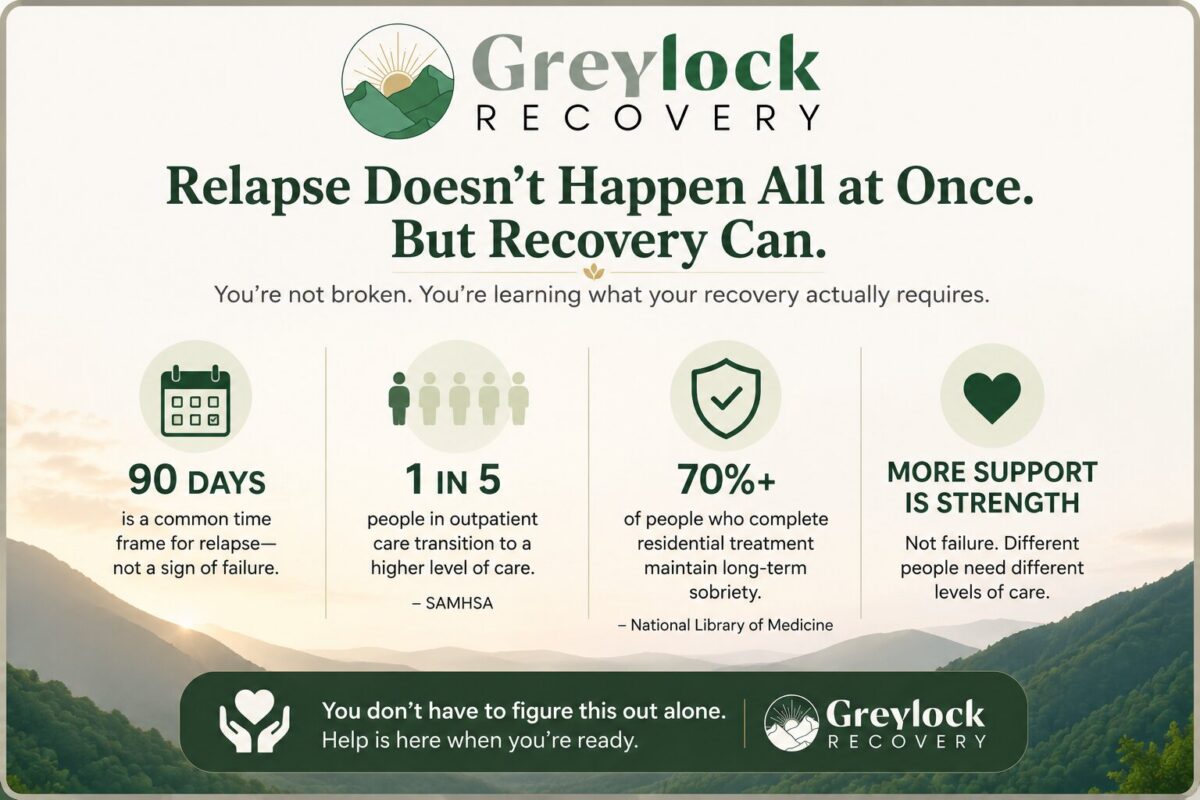
At Greylock Recovery, I’ve met a lot of people who believed relapse after 90 days meant they had ruined everything. Some eventually realized they didn’t need less support—they needed more. For many, exploring live-in recovery support became less about “starting over” and more about finally admitting outpatient care alone wasn’t enough anymore.
I Thought Ninety Days Was Supposed to Mean Something
That number mattered to me.
Ninety days felt like proof I was becoming someone different. Someone stable. Someone trustworthy. Someone who finally had control again.
People congratulated me constantly.
“You’re doing amazing.”
“You look so much healthier.”
“You’ve got this now.”
And part of me wanted desperately to believe that was true.
But another part of me still felt deeply fragile underneath all the progress.
That’s the part nobody saw.
I think relapse becomes especially painful after a few months sober because people start rebuilding identity around recovery. You begin imagining a future again. Families relax a little. Friends trust you more. You trust yourself more.
So when relapse happens, it doesn’t just feel like losing sobriety.
It feels like losing the version of yourself you were trying to become.
The Emotional Relapse Happened First
Looking back, I can see now that the physical relapse was the final symptom—not the beginning.
The emotional relapse started weeks earlier.
I stopped telling the truth about how I was doing. Not in huge obvious ways. Just little ones.
“I’m fine.”
“Just stressed.”
“I don’t really need as much support anymore.”
“Work’s been crazy.”
But underneath those sentences, I was unraveling quietly.
I was lonely in a way I couldn’t explain. I felt emotionally disconnected from everyone around me. Recovery had started feeling performative instead of honest.
I knew how to say the right things.
That was the scary part.
People assume relapse always comes from rebellion or recklessness. Sometimes it comes from exhaustion. From slowly losing emotional connection to yourself while still technically following the rules.
Outpatient Helped Me Stay Alive
I want to say this clearly because shame distorts memory after relapse.
Outpatient treatment helped me enormously.
It gave me structure during chaos. It helped stabilize my life enough for me to think clearly again. It introduced me to people who genuinely cared whether I lived or died.
Without that support, I honestly don’t know where I would’ve ended up.
But eventually I realized something difficult:
I was surviving. Not healing.
There’s a difference.
I’d leave treatment groups feeling grounded, then immediately return to the exact same environment every night:
- The same stress
- The same emotional triggers
- The same people
- The same routines
- The same pressure to appear okay
And eventually, trying to hold recovery together inside the same chaos became emotionally exhausting.
I Was Still Building My Entire Life Around Avoiding Pain
That realization hit hard after relapse.
I used to think recovery meant simply not using.
But eventually I realized my entire life was still organized around emotional avoidance.
Work became distraction. Isolation became protection. Humor became deflection. Busyness became survival.
I was sober, but my nervous system was still constantly bracing for impact.
And when someone lives that way long enough, cravings don’t always show up as obvious urges to use.
Sometimes they show up as fantasies about relief.
Relief from pressure. Relief from pretending. Relief from feeling emotionally raw all the time.
That’s what scared me most after relapse:
I realized I hadn’t actually learned how to live without constantly escaping myself yet.
The Shame After Relapse Felt Physical
I remember waking up the next morning feeling like my entire body was made of shame.
Not guilt.
Shame.
The kind that tells you:
“You ruined everything.”
“People were right not to trust you.”
“You had your chance already.”
And honestly? That shame almost kept me from asking for more help.
Because relapse after a few months sober creates this weird pressure where people think you should “know better” by then.
I thought everyone would see me as a fraud.
Especially because I had become “the person doing well.”
I’d shared in groups. Encouraged newer people. Said all the hopeful things people say when recovery is finally starting to feel real.
Then suddenly I was the person hiding again.
That emotional whiplash is brutal.
Needing More Care Didn’t Mean I Failed
This took me a long time to understand.
At first, I treated the idea of residential care like proof that I was somehow worse than other people.
Like I’d failed outpatient treatment.
But eventually someone told me something that changed how I viewed everything:
“Different levels of care exist because different people need different amounts of support at different times.”
That sounds simple now. But at the time, it cracked something open in me.
Because I had been viewing treatment like a ladder:
Outpatient meant success. More intensive care meant failure.
But recovery is not a competition about who can struggle with the least support.
Sometimes people genuinely need:
- More structure
- More accountability
- More emotional stabilization
- More distance from triggers
- More time away from survival mode
There is no shame in that.
Insurance Fear Kept Me Stuck Longer Than Addiction Did
This part matters because almost nobody talks about it honestly.
I delayed getting more help partly because I convinced myself treatment was financially impossible.
I spent hours online searching things connected to inpatient rehab Massachusetts insurance, trying to figure out whether I even had realistic options before allowing myself to emotionally consider live-in treatment.
And fear about money becomes emotionally tangled with shame very quickly.
You start thinking:
“I already caused enough damage.”
“I can’t afford this.”
“I’ll lose my job.”
“I’ll become a burden.”
Sometimes those fears become another way relapse keeps people isolated.
That’s why actual conversations with treatment providers matter so much. A lot of people discover they have insurance options, coverage possibilities, or support pathways they never realized existed because fear kept them from asking.
Residential Care Felt Less Like Punishment and More Like Relief
I used to imagine residential treatment as something people got sent to after completely destroying their lives.
That wasn’t my experience at all.
Honestly, the first feeling I remember was relief.
Not instant happiness. Not transformation. Just relief.
For the first time in a long time, I wasn’t trying to manage:
- Cravings
- Work stress
- Emotional masking
- Family pressure
- Constant triggers
- Isolation
- Shame
- Daily survival
All at the same time.
There’s a metaphor I still think about:
Active addiction felt like trying to hold my breath underwater while convincing everyone I was fine.
Residential treatment was the first place I stopped pretending I could do that forever.
Relapse Did Not Erase My Progress
This is the part I wish more people understood.
Relapse does not erase every honest thing you learned while sober.
It does not erase growth. It does not erase insight. It does not erase the days you fought for yourself even when things felt unbearable.
Yes, relapse can be dangerous.
Yes, it needs to be taken seriously.
But shame loves turning relapse into evidence that someone is hopeless. That simply isn’t true.
Sometimes relapse becomes information.
Painful information. Important information.
Information about what level of support someone actually needs to survive long term.
Sometimes More Support Is the Most Honest Thing You Can Choose
There’s courage in admitting:
“I can’t keep white-knuckling this.”
There’s courage in saying:
“I need more structure.”
“I need distance from this environment.”
“I need help staying emotionally stable.”
“I need more than I thought I would.”
That honesty can feel humiliating at first. Especially for people who pride themselves on independence or functionality.
But sometimes the most dangerous thing a person can do after relapse is continue pretending they’re okay.
If you’re sitting in the aftermath of relapse right now, wondering whether you need more support than before, please hear this:
You are not broken because outpatient care wasn’t enough.
You are learning what your recovery actually requires.
And for some people, that includes exploring options connected to inpatient rehab Massachusetts insurance and finding a level of care that finally feels sustainable instead of barely survivable.
FAQ
Is relapse after 90 days common?
Yes. Relapse can happen at any stage of recovery, including after weeks or months of sobriety. It does not mean someone is hopeless or incapable of long-term recovery.
Does relapse mean outpatient treatment failed?
Not necessarily. Some people benefit from additional structure, support, or a different level of care over time. Recovery needs can change as emotional and environmental challenges become clearer.
How do I know if I need more than outpatient support?
Some signs include repeated relapse, constant cravings, emotional instability, unsafe living environments, isolation, or feeling unable to maintain sobriety between treatment sessions.
Why does relapse feel so emotionally devastating?
Many people attach identity and hope to sobriety milestones. Relapse can trigger intense shame, grief, and fear about losing progress or disappointing others.
Can insurance help cover residential treatment?
Many insurance plans may help cover treatment services depending on coverage details and medical necessity. Speaking directly with a treatment provider can help clarify available options.
What if I feel embarrassed asking for more help?
That feeling is extremely common. But needing additional support is not weakness. Many people require different levels of care throughout recovery.
Does relapse erase recovery progress?
No. Relapse may interrupt progress, but it does not erase emotional growth, insight, or the work someone has already done toward healing.
Call (413) 848-6013 or visit Greylock Recovery’s residential addiction treatment services to learn more about addiction recovery programs and compassionate support.