
Ninety-three days.
For a while, that number felt like a new identity.
Ninety-three days without opioids.
Ninety-three days of rebuilding trust.
Ninety-three days of believing I had finally escaped a cycle that had controlled so much of my life.
Then one afternoon, I relapsed.
Not because I stopped caring.
Not because treatment failed.
Not because recovery was impossible.
I relapsed because recovery is more complicated than counting days.
The strange thing is that the relapse itself lasted less time than the shame that followed it.
For weeks afterward, I kept asking myself the same question:
“What should I do differently this time?”
Eventually that question turned into another one.
“If I go back, how long should I stay?”
Thirty days?
Sixty days?
Longer?
If you’re asking yourself a similar question right now, I understand.
Because after a relapse, you’re usually not comparing treatment lengths.
You’re trying to avoid another heartbreak.
And that’s a very different conversation.
If you’re researching options like live-in addiction recovery support, there’s a good chance you’re carrying that same hope.
Not for perfection.
For something that lasts.
I Thought Recovery Was About Getting Sober
The first time I entered treatment, I thought the goal was simple.
Stop using.
Stay away from opioids.
Move on with life.
That was it.
Looking back, I wasn’t thinking about recovery.
I was thinking about abstinence.
The difference matters.
Stopping opioid use is an important beginning.
Learning how to live without opioids is an entirely different challenge.
One involves physical healing.
The other involves emotional healing, relationship repair, stress management, self-awareness, and learning how to exist in a world that suddenly feels very different.
I didn’t understand that at first.
Many people don’t.
The Hidden Cost of Leaving Before You’re Ready
Most discussions about treatment length focus on logistics.
Work schedules.
Family obligations.
Finances.
Insurance.
All of those concerns are real.
But there is another cost that rarely gets discussed.
The cost of having to start over.
Every relapse takes something.
Not just time.
Confidence.
Momentum.
Trust.
Hope.
I remember how defeated I felt after using again.
Not because I had lost ninety-three days.
Because I felt like I had lost belief in myself.
I started questioning every decision.
Every promise.
Every accomplishment.
That emotional damage lasted far longer than the relapse itself.
And that’s when I started seeing treatment differently.
Not as time away from life.
As time invested in protecting it.
Why Thirty Days Can Feel Appealing
There are obvious reasons many people are drawn to shorter treatment stays.
Life doesn’t stop.
Jobs still exist.
Families still need support.
Responsibilities continue waiting.
When you’re overwhelmed, thirty days can feel manageable.
Achievable.
Less disruptive.
And for some people, that amount of time can absolutely be meaningful.
The problem isn’t that thirty days is too short for everyone.
The problem is assuming that the calendar alone determines readiness.
Recovery doesn’t always follow a neat schedule.
Some people make tremendous progress quickly.
Others need additional time to address challenges that have been building for years.
The question isn’t always:
“How long should treatment last?”
Sometimes the better question is:
“How much support do I need right now?”
Physical Recovery and Emotional Recovery Rarely Move at the Same Speed
One of the biggest surprises I experienced involved timing.
My body improved faster than my thinking.
Within weeks, many physical symptoms had stabilized.
From the outside, I looked healthier.
Inside, however, I was still struggling.
Stress felt overwhelming.
Cravings appeared unexpectedly.
Emotions I had buried for years suddenly demanded attention.
Grief.
Regret.
Fear.
Loneliness.
All of it surfaced.
The irony is that many people start feeling physically stronger right around the time deeper emotional work begins.
That creates a dangerous illusion.
You start looking better.
So you assume you’re ready.
Sometimes you are.
Sometimes you’re not.
That’s why treatment decisions often require looking beyond physical stabilization.
The Real Question Isn’t Thirty Days Versus Sixty Days
It’s something deeper.
The question is:
“What keeps bringing me back?”
That answer looks different for everyone.
For some people, it’s unresolved trauma.
For others, it’s isolation.
Some struggle with anxiety.
Others struggle with depression.
Some feel confident inside treatment but become overwhelmed once they return to everyday life.
Understanding those patterns takes time.
More importantly, it takes honesty.
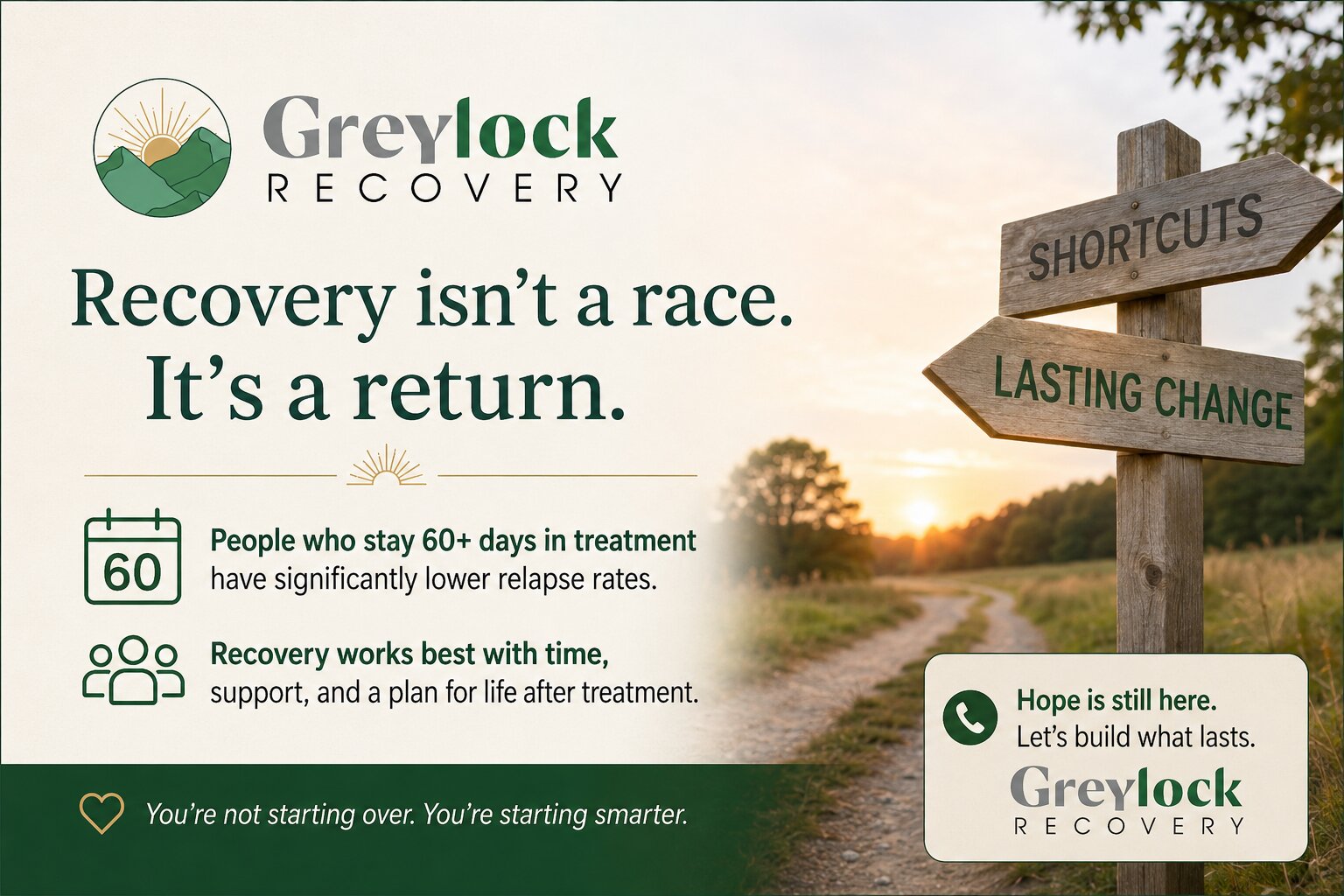
The people who benefit most from recovery aren’t always the people who stay the longest.
They’re often the people who become willing to examine what’s underneath their substance use.
And that process doesn’t always happen immediately.
The Conversations That Changed My Perspective
After my relapse, I started talking with other alumni.
People with six months.
People with a year.
People with several years.
I expected to hear stories about willpower.
Discipline.
Motivation.
Instead, I heard something different.
Patience.
Many people told me they had underestimated how much healing remained after the initial crisis passed.
They weren’t ashamed of needing additional support.
They were grateful they received it.
One person told me something I’ll never forget:
“The goal wasn’t getting out of treatment. The goal was staying out of active addiction.”
That sentence changed how I viewed everything.
Recovery Is Not a Race
Addiction creates urgency.
Recovery often requires patience.
Those two realities frequently collide.
When you’re struggling, it’s natural to want the quickest solution.
The shortest timeline.
The fastest path forward.
I understand that impulse.
I lived it.
But recovery rarely rewards rushing.
It rewards preparation.
The stronger the foundation, the more stable the structure becomes.
Nobody rushes to leave a hospital after major surgery because they’re eager to prove they’re healed.
Yet people often approach addiction recovery that way.
Healing deserves the same respect.
What I Learned About Second Chances
One of the greatest gifts recovery gave me was a different understanding of relapse.
Before it happened, I viewed relapse as failure.
After it happened, I began viewing it as information.
Painful information.
Humbling information.
But information nonetheless.
It forced me to ask questions I had avoided.
What was I missing?
Where was I vulnerable?
What kind of support did I actually need?
The answers weren’t always comfortable.
But they were useful.
And usefulness matters more than pride when your future is on the line.
If You’re Comparing Options Right Now
You may be reading this while researching treatment in Massachusetts.
You may be trying to decide whether a shorter stay is enough.
You may have come across information about a 30 day inpatient rehab MA option and wondered whether it would meet your needs.
Or perhaps you’re considering additional time because you’ve experienced relapse before.
The reality is that there isn’t one perfect number.
There is only the amount of support that helps you build a recovery strong enough to continue after treatment ends.
That’s why treatment planning should focus on individual needs rather than arbitrary timelines.
The goal isn’t completing a program.
The goal is creating a life that no longer requires opioids to survive.
Frequently Asked Questions
Is a 30-day program enough for opioid recovery?
For some people, a 30-day stay provides a strong starting point. For others, additional support may be beneficial depending on personal history, relapse risk, and recovery needs.
Does staying longer guarantee success?
No treatment length can guarantee recovery. However, additional time may allow some individuals to address deeper challenges, strengthen coping skills, and build a stronger foundation.
Why do people choose longer treatment stays?
Some people need more time to address emotional, behavioral, or environmental factors contributing to substance use. Recovery often involves more than physical stabilization.
If I relapsed after 90 days, does that mean treatment failed?
No. Relapse does not automatically mean treatment failed. It may indicate that additional support, different strategies, or further recovery work are needed.
How do I know how much support I need?
The best approach is an individualized assessment. Recovery needs vary significantly from person to person, and treatment recommendations should reflect those differences.
Is it normal to feel ashamed after relapse?
Yes. Many people experience guilt and shame after returning to substance use. Those feelings are common, but they do not define your future or determine your ability to recover.
What matters most when choosing a treatment program?
Rather than focusing only on length of stay, consider the quality of care, level of support, treatment approach, and how well the program fits your specific needs.
One Last Thought
If you’ve relapsed after ninety days—or after any amount of sobriety—you haven’t erased your progress.
You haven’t lost everything you learned.
You haven’t ruined your future.
You simply learned that recovery required more than you realized.
Many of us have stood exactly where you are now.
Ashamed.
Discouraged.
Unsure what comes next.
The encouraging truth is that another chance still exists.
And sometimes the strongest recovery begins the moment you stop asking how quickly you can leave treatment and start asking what will help you stay well when treatment ends.
Call 413-848-6013 or visit our residential addiction treatment services to learn more about our addiction recovery programs, residential addiction treatment services Williamstown, Massachusetts.