
There is a particular fear that doesn’t get talked about enough.
It’s not the fear of withdrawal.
It’s not the fear of treatment.
It’s not even the fear of failing.
It’s the fear that sobriety might erase the version of yourself you’ve spent years becoming.
We’ve sat with countless people in Berkshire County who carried this concern quietly. On the surface, they were researching treatment options. They were reading about support programs. Some were searching for medication-assisted care. Others were looking into local resources after years of trying to manage alcohol on their own.
But underneath those searches was a much more personal question:
“If alcohol leaves, what happens to me?”
If that question feels familiar, you’re not alone.
Many people exploring options like medication-assisted recovery support aren’t just looking for help with drinking. They’re trying to understand what recovery might mean for their identity.
And perhaps the most important thing we can tell you is this:
The person you are afraid of losing may be the very person recovery helps you find again.
The Fear Is Rarely About Alcohol
People often assume someone hesitates to seek help because they want to keep drinking.
That isn’t always true.
In fact, many people already know alcohol is causing problems.
They know their health is suffering.
They know relationships have become strained.
They know they spend too much time thinking about drinking.
They know the cycle is exhausting.
Yet they still hesitate.
Why?
Because alcohol often becomes woven into identity.
It becomes part of social life.
Part of creativity.
Part of confidence.
Part of celebration.
Part of how someone understands themselves.
When that happens, removing alcohol can feel less like changing a habit and more like losing a piece of yourself.
That’s a much heavier fear than most people realize.
The Creative Mind Often Carries This Fear the Most
We’ve heard versions of the same concern from artists, musicians, writers, entrepreneurs, designers, photographers, and performers.
The details change.
The emotion remains remarkably similar.
A writer worries their words won’t come.
A musician worries their inspiration will disappear.
An artist fears a blank canvas will become even harder to face.
A business owner worries they’ll lose the confidence that helps them lead.
Someone who has always been the “fun one” fears they’ll become boring.
Alcohol doesn’t simply become a substance.
It becomes a story.
A companion.
A creative ritual.
A source of perceived courage.
The idea of letting it go can feel like stepping into an unfamiliar version of life.
And unfamiliar can feel terrifying.
Alcohol Doesn’t Usually Steal Identity All At Once
One of the most painful realities of alcohol use is how gradually it changes things.
Few people notice it happening.
At first, alcohol may seem helpful.
It quiets anxiety.
It lowers self-consciousness.
It creates temporary relief.
It feels like it’s adding something to life.
Over time, however, the relationship often changes.
What once felt freeing begins creating limitations.
The writer struggles to finish projects.
The musician misses opportunities.
The entrepreneur starts operating below their potential.
The parent becomes less emotionally available.
The partner becomes increasingly distant.
The dreamer begins dreaming smaller dreams.
The difficult part is that this process happens slowly.
Like fog rolling in across a mountain range, you don’t always notice how much visibility you’ve lost until you can barely see the path ahead.
The Surprise Many People Don’t Expect
People often enter recovery expecting to feel deprived.
What surprises many of them is that they eventually feel relieved.
Not immediately.
Not overnight.
But gradually.
The constant calculations begin fading.
The mental bargaining quiets down.
The promises and negotiations lose their grip.
People frequently describe feeling as though they have more mental space.
More emotional space.
More creative space.
More energy.
More freedom.
The thing they feared would make life smaller often ends up making life larger.
That’s one of the most common experiences we hear from people further along in recovery.
Creativity Doesn’t Usually Disappear
This fear deserves its own conversation because it’s so common.
Many creative people genuinely believe alcohol fuels their creativity.
And to be fair, alcohol can change how thoughts feel.
It can lower inhibitions.
It can temporarily reduce self-criticism.
It can create the sensation of creative freedom.
But sensation and reality are not always the same thing.
Many people discover that while alcohol may have helped them start ideas, it often made it harder to finish them.
It may have helped them feel inspired while simultaneously reducing consistency, discipline, and follow-through.
Recovery often reveals something unexpected.
The creativity was never in the alcohol.
The creativity was in the person.
The alcohol was simply taking credit for it.
Imagine carrying a flashlight while someone beside you insists they’re creating the light.
Eventually, you might start believing them.
Recovery often helps people realize the light belonged to them all along.
The Person Underneath Hasn’t Disappeared
One of the most emotional moments people describe in recovery isn’t dramatic.
It’s subtle.
It’s the moment they laugh genuinely.
The moment they enjoy music again.
The moment they become absorbed in a creative project.
The moment they feel excitement about the future.
The moment they realize:
“I’m still here.”
Not a new person.
Not a replacement version.
Not a stranger.
The same person.
Perhaps a little bruised.
Perhaps a little tired.
Perhaps carrying some healing work ahead.
But still themselves.
That realization often becomes a turning point.
Because the fear of losing identity begins losing power.
Sometimes Support Creates Room to Reconnect
Many people searching for a Vivitrol shot for alcohol support in Berkshire County aren’t looking for a shortcut.
They’re looking for breathing room.
They’ve spent years battling cravings, urges, and constant thoughts about drinking.
The effort itself becomes exhausting.
For some individuals, medication-assisted support becomes one piece of a larger recovery plan.
Not because it changes who they are.
Because it helps reduce the amount of energy consumed by alcohol-related struggles.
That energy can then be redirected.
Toward relationships.
Toward healing.
Toward creative pursuits.
Toward personal goals.
Toward life itself.
Many people searching for a Vivitrol clinic near me aren’t searching because they want to become different people.
They’re searching because they’re tired of feeling trapped.
That’s an important distinction.
Recovery Is Often an Act of Returning
We sometimes hear people talk about recovery as if it’s a transformation into someone entirely new.
For many people, it feels more like a return.
A return to interests that got pushed aside.
A return to ambitions that seemed impossible.
A return to relationships that mattered.
A return to values that became harder to live by.
A return to self-respect.
A return to possibility.
The process isn’t always easy.
Healing rarely is.
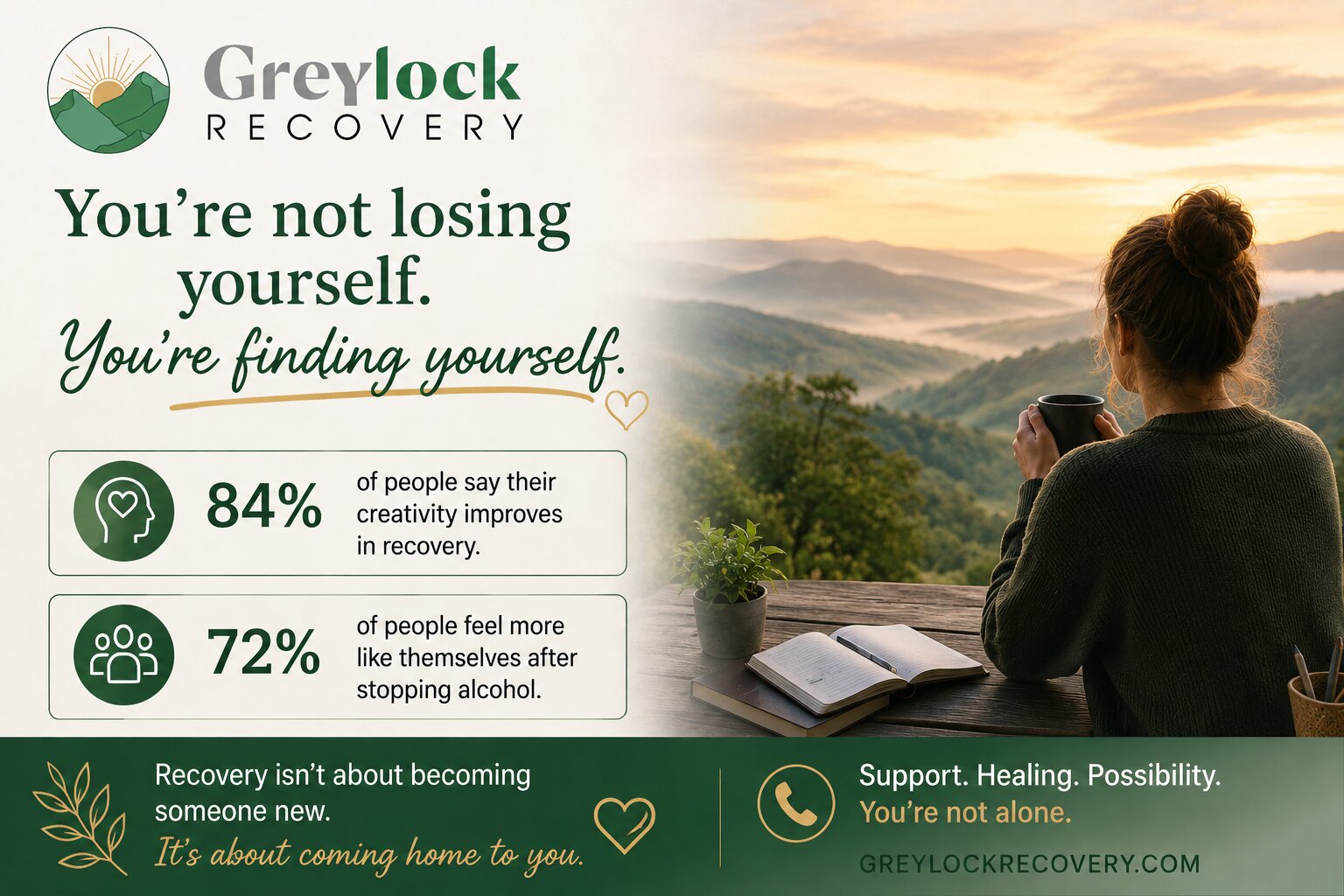
But many people discover that sobriety isn’t about erasing identity.
It’s about removing the obstacles that made identity harder to access.
If You’re Standing Between Fear and Hope
Maybe you’ve already recognized that alcohol is affecting your life.
Maybe you’ve tried cutting back.
Maybe you’ve made promises to yourself.
Maybe you’ve searched treatment websites and closed them before finishing the page.
Maybe you’ve spent months wondering whether help is worth it.
And maybe the question beneath all those questions is this:
“Who will I be if I stop?”
If that’s where you are right now, we want you to know something.
That fear is understandable.
It’s human.
And it doesn’t mean you’re not ready.
Often, it means you’re standing at the edge of something important.
The person you are afraid of losing may not disappear at all.
You may simply meet them again.
Frequently Asked Questions
Will recovery change my personality?
Recovery doesn’t erase personality. Many people find that qualities they value most—creativity, humor, compassion, and passion—become easier to access when alcohol is no longer dominating their lives.
What if alcohol feels connected to my creativity?
This is a common concern among creative individuals. Many people discover that creativity remains intact in recovery and often becomes more consistent and productive over time.
Can medication-assisted support help with alcohol recovery?
For some people, medication-assisted care becomes an important part of a comprehensive treatment plan. It may help reduce alcohol-related challenges and support long-term recovery efforts.
Is it normal to be afraid of sobriety?
Yes. Many people fear how life will change without alcohol. These concerns are common and often involve identity, relationships, confidence, and social situations.
Why do people search for local medication-assisted options?
Many individuals are looking for practical support that can help them focus less on alcohol and more on rebuilding the life they want.
Does seeking treatment mean I’ve failed?
No. Seeking help is often a sign of self-awareness and courage. It means you’re exploring ways to create a healthier future.
How do I know if it’s time to seek support?
If alcohol occupies significant mental space, affects relationships, impacts health, or makes it difficult to live the life you want, it may be worth exploring professional guidance.
Call 413-848-6013 or visit our medication-assisted treatment services to learn more about our treatment services, medication assisted services Williamstown, Massachusetts.