

You got clean. You rebuilt. Maybe you even inspired others.
But lately? You’re running on fumes. Not in crisis. Not using. But if you’re being honest, something’s off. You feel disconnected, hollow, maybe a little ashamed that you’re not feeling more “grateful.”
You’ve been sober long enough to know this isn’t about white-knuckling through cravings. This is deeper. Quieter. Scarier, in a way—because it’s the kind of slow slide that can go unnoticed until it turns into something else.
So let’s name it: Sometimes, in long-term recovery, the spark fades. And when it does, going back to a detox program in Williamstown, MA might be the bravest, most forward-moving step you can take.
Detox Isn’t Just for Day One
There’s a myth in recovery circles that detox is just for “day one.” That it’s for people who’ve hit a dramatic rock bottom—who are shaking, withdrawing, or overdosing.
But here’s the truth: Detox can be a reset, not just a rescue.
For some long-term alumni, coming back to detox means you slipped. Maybe a little. Maybe a lot. For others, it’s not about substances—it’s about recognizing the signs of a different kind of decline. Emotional, spiritual, functional.
And sometimes, pressing pause in a detox setting gives your body and brain just enough space to recalibrate. No performance. No pretending. Just a chance to start again—on your own terms.
You Haven’t Failed. You’re Paying Attention.
Let’s be clear: returning to a detox program does not mean you’ve “gone backwards.”
It means you’re listening. To your body. To your gut. To that whisper of fear that says, “This isn’t sustainable.”
You’re not stuck. You’re situationally lost. And the fact that you’re considering action? That you’re not just white-knuckling it or hiding? That’s powerful. That’s not regression—that’s recovery evolving.
Numbness Is a Symptom, Not a Character Flaw
People talk about cravings, about triggers, about grief and joy and gratitude in recovery.
But they don’t talk enough about the flatness. The emotional static. The spiritual dryness that can sneak in after the chaos calms down.
It’s the feeling of going to meetings and not hearing anything. Of checking all the boxes but feeling nothing shift. Of secretly wondering if you’re broken because you miss feeling something—even if it was pain.
This isn’t self-pity. It’s a real phase. And for some, it’s the sign that something needs attention. Not judgment. Not punishment. Just honest recalibration.
What Coming Back to Detox Can Look Like
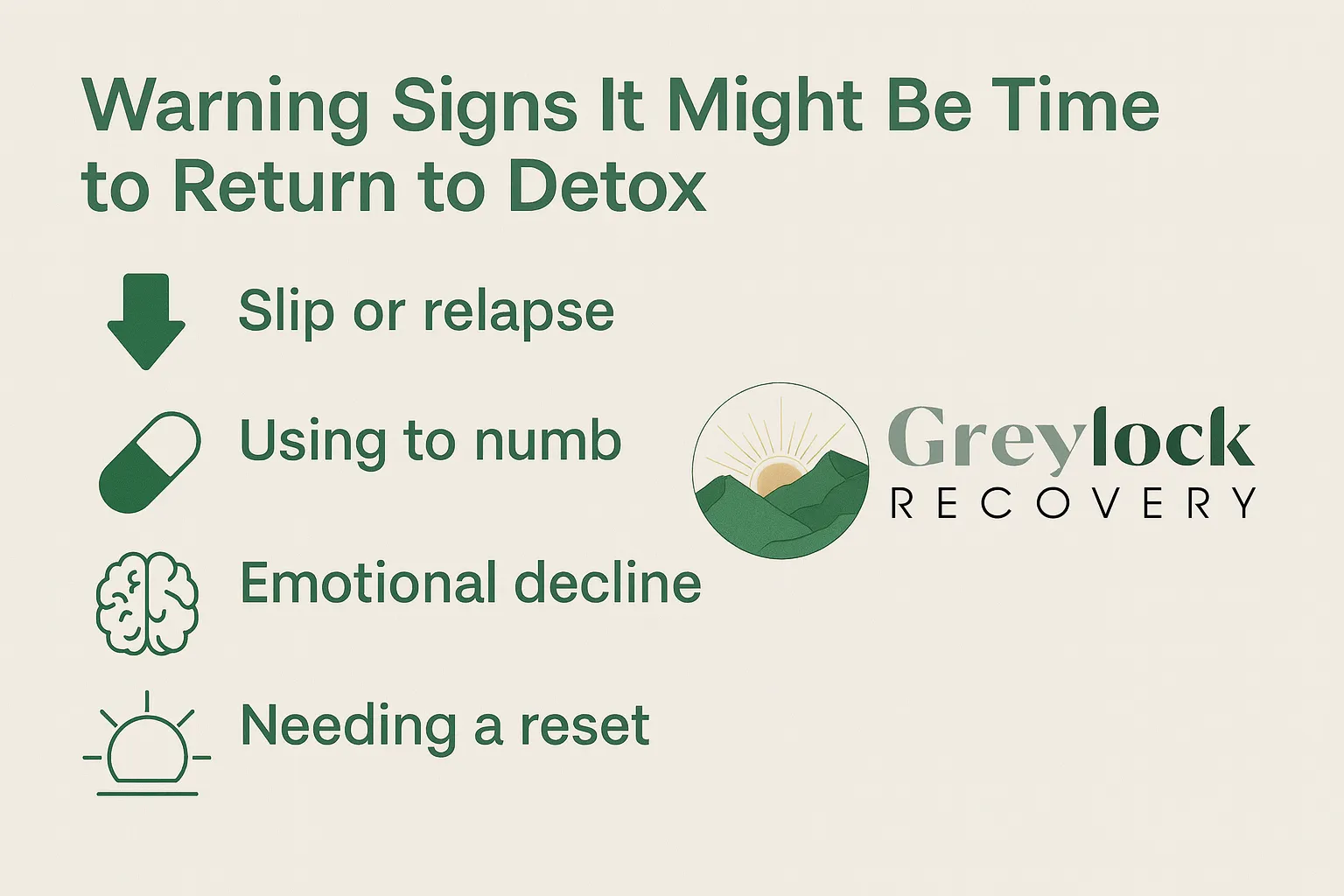
Let’s get specific. Returning to detox might mean:
- You’ve used a few times, and want to get ahead of it before it spirals
- You’re taking “just enough” of something to stay numb, and you’re scared
- You haven’t relapsed, but you’re mentally circling the drain
- You need a break from the noise to figure out what’s real again
At Greylock Recovery, we see this all the time. Alumni who aren’t falling apart—but aren’t okay either. They don’t need lectures. They need space. Safety. A team that knows what early recovery looks like—and what mid-recovery drift feels like, too.
Detox at Greylock: Not Just a Bed, But a Reset
We’re not a revolving door. We’re not a punishment post. Our detox program in Williamstown, MA offers clinical, medical, and emotional support for people who already know what’s at stake.
When you walk back in here as an alum, we don’t say, “What happened?” We say, “Welcome back.” And then we get to work.
Our team offers:
- Medical detox with comfort in mind – no toughing it out alone
- Clinical care that meets you where you are—not where your chart says you should be
- Alumni-aware support, including re-integration planning, peer check-ins, and optional step-down levels of care
You’re not a stranger. You’re part of this community. And we know that sometimes, even the strongest people need to circle back for a recharge.
The Shame Spiral Stops Here
Let’s say it plainly: Shame is useless here.
You don’t owe us a perfect track record. You don’t need to defend your relapse or numbness or emotional crash. You’ve done hard things already.
Coming back to detox doesn’t mean you blew it. It means you value your life enough not to let it drift into something you don’t recognize.
We don’t need to “fix” you. We just want to help you remember who you were becoming before this slump.
Williamstown Isn’t Far—And Neither Is the Real You
You don’t have to fly across the country or disappear for 90 days. Detox can be local. Focused. Effective.
Greylock’s program serves alumni across Massachusetts, including:
- Berkshire County
- Pittsfield
- North Adams
- Bennington (VT)
- And surrounding towns where community care matters
Your recovery doesn’t have to happen in isolation. You can plug back in right here, close to home.
Detox Program FAQ for Long-Term Alumni
I haven’t had a “real relapse.” Do I still qualify for detox?
Yes. We admit clients based on clinical need, not judgment. Even “slips” or emotional spirals can warrant a safe reset. If you’re unsure, call us. We’ll talk through it together.
Will I lose all my progress if I come back to detox?
Absolutely not. Returning to detox is a continuation of your recovery, not a reset to zero. Your self-awareness is part of your strength—not a failure.
What if I’m emotionally drained but haven’t used?
We hear this often. If you’re chemically sober but deeply unwell emotionally or mentally, we can still help. We’ll assess whether detox or another level of care is right.
How long will I be in detox?
Most detox stays range from 3–7 days, depending on substance use and clinical needs. From there, we’ll help you determine if further support (like PHP or IOP) is appropriate.
What’s different for alumni coming back?
We know you. We respect your history. Your care is tailored to your current reality—not your past chart. We offer re-engagement support without shame or assumptions.
You’re Not Broken. You’re Aware.
The truth? You might not even need a full detox stay. Maybe you just need to be heard. Seen. Taken seriously before things unravel.
But if you do need detox—don’t let pride keep you from choosing peace.
You didn’t build this recovery life by accident. You fought for it. And coming back for support isn’t going backward. It’s protecting what you worked for.
Ready to Reset—Without the Shame?
Call (413) 848-6013 or visit our Detox Program page to find out how Greylock Recovery supports long-term alumni with honesty, dignity, and real care. The door’s still open. Always.