

You’re the one who keeps things going.
Deadlines met. Family covered. Appearances maintained.
To the outside world, you’re doing just fine.
But inside? You’re unraveling. Slowly. Quietly. Sometimes so subtly that not even your closest people see it.
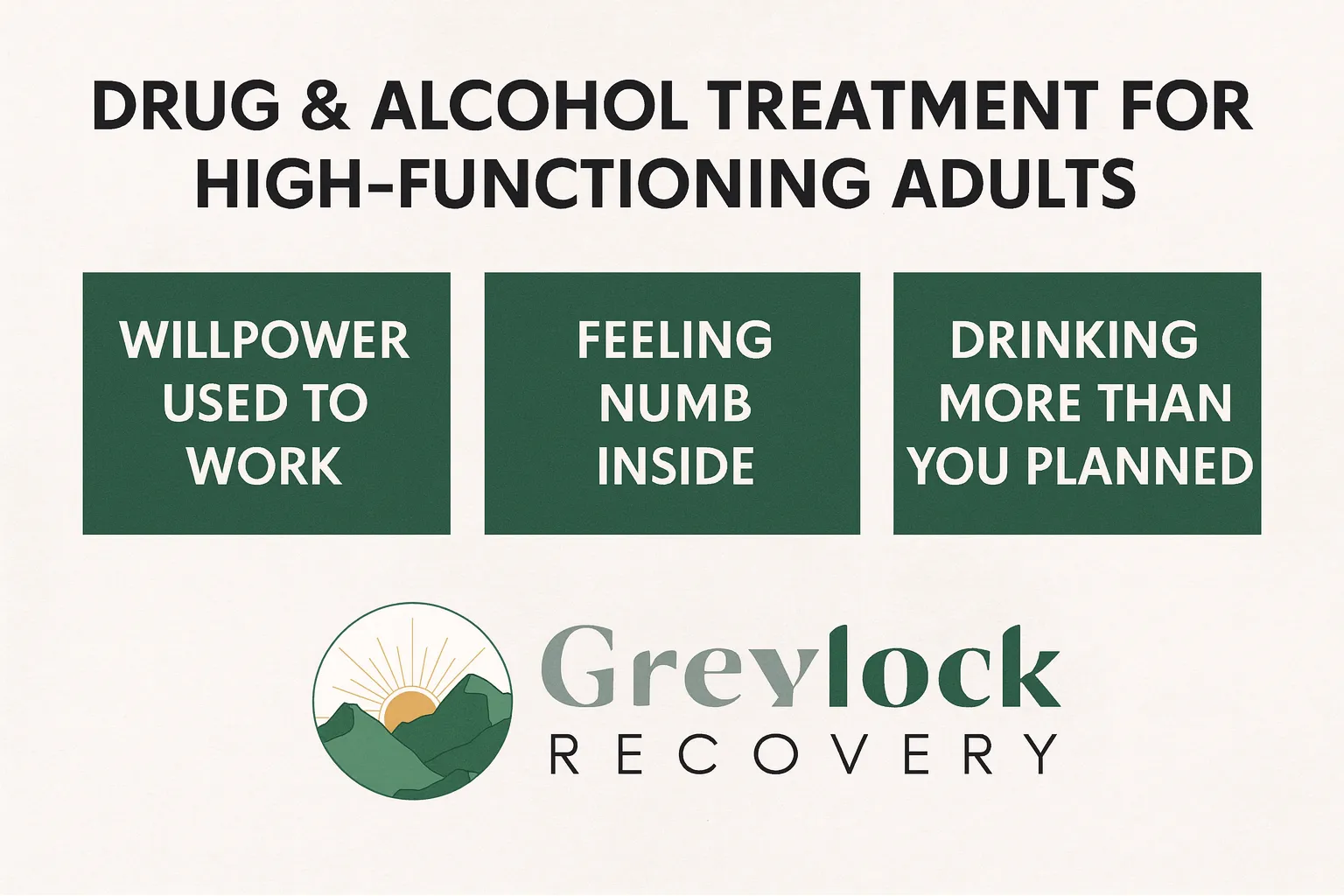
Willpower used to work. It kept things functional. But now? It’s not enough. And you’re running out of versions of “I’m okay” to sell—even to yourself.
At Greylock Recovery, we meet a lot of people just like you: high-functioning adults whose lives look stable on the outside—but feel like a house of cards on the inside.
This blog is for you. Not to scare you. Not to fix you. But to show you how residential addiction treatment might give you something willpower alone never could: freedom that lasts.
High-Functioning Doesn’t Mean Emotionally Safe
You’ve done a remarkable job holding everything together. But white-knuckling your way through life isn’t the same as living it.
You may not be missing work. You may be paying your bills. You may even be “the responsible one.” But if your inner world is full of fear, compulsions, secrecy, or emotional flatness… that’s not wellness.
That’s surviving.
And while surviving can get you through a lot, it can’t heal you. It can’t bring rest. It can’t offer peace.
That’s what treatment is for—not because you failed, but because you deserve more than just hanging on.
Willpower Is a Tool—But It Was Never Meant to Be the Foundation
Addiction is rarely about willpower. It’s about pain. About coping. About trying to regulate emotions that feel too big or too buried to face.
Most high-functioning clients come to us exhausted—not because they’re out of strength, but because they’ve been using all their strength just to stay one step ahead of collapse.
They’ve tried:
- Cutting back “on their own”
- Only drinking on weekends
- Switching substances
- Scheduling detoxes during vacation
All with the hope that if they just try harder, it’ll finally stick.
But trying harder isn’t healing. Healing comes when you stop managing symptoms in isolation and start addressing the deeper emotional drivers underneath.
What Residential Addiction Treatment Offers That You Can’t Do Alone
Residential treatment isn’t about punishment or loss of control. It’s about structured, supported space to reset your nervous system, your choices, and your relationships.
At Greylock, here’s what our clients often say made the biggest difference:
- Safety: No need to hide or perform. You’re met as you are, not judged.
- Daily structure: Your nervous system begins to settle once it’s not chasing chaos.
- Connection: With clinicians, with peers, and—maybe most importantly—with yourself.
- Insight: Through trauma-informed therapy and compassionate feedback, you finally start understanding why it’s been so hard to stop.
And when you leave? You don’t go back to “figuring it out” solo. You leave with a plan. A team. A community. And real tools.
Who Needs to “Hit Bottom” First? Not You.
This idea that you need to lose your job, crash your car, or destroy your relationships before you qualify for help? It’s outdated—and dangerous.
Here’s what hitting bottom often looks like for high-functioning people:
- Drinking or using more than you planned… again.
- Canceling on friends or faking excuses.
- Feeling increasingly numb or flat inside.
- Constantly scanning your life for signs you’re “still okay.”
You don’t have to lose everything to realize you’ve been losing yourself.
Residential addiction treatment is for people who want to stop drifting further away from their values, their joy, and their own sense of clarity. And if you’re reading this? You’re already closer to that clarity than you think.
What Treatment Looks Like at Greylock Recovery
We know it’s hard to imagine stepping away from your life. So here’s what stepping into ours looks like:
1. A Private, Peaceful Setting
Greylock is located in the Berkshires—quiet, natural, and intentionally small. Our residential addiction treatment program is designed to feel safe, not sterile.
2. Personalized Clinical Care
You’ll receive a full assessment that considers your history, your strengths, your patterns, and your goals. Therapy is trauma-informed, nonjudgmental, and rooted in real-world progress.
3. Supportive Routine
Each day includes a balance of group sessions, individual therapy, reflection time, skill-building, and recovery-focused education. You’ll eat well, rest, and move—simple things that start to heal a dysregulated system.
4. Confidential and Discreet Admission
We understand your reputation matters. Our process is confidential, and we’ll work with your schedule and privacy needs with professionalism and care.
Life After Treatment: It Doesn’t Have to Be a Giant Leap
Most clients leave residential care with something they haven’t had in a long time: real hope. Not the kind you fake on the outside while crumbling inside. But grounded, embodied hope.
Recovery after residential treatment doesn’t mean:
- Moving into a monastery
- Quitting your job
- Announcing your story to everyone you know
It might mean:
- Taking weekends off and actually resting
- Attending outpatient therapy with a real support system
- Learning how to manage cravings, not just deny them
- Feeling proud of your boundaries—instead of resentful or afraid
You don’t have to become someone new. Just someone you actually recognize again.
From a Clinician’s Perspective: What I Want You to Know
If you’re still reading, I’m not going to push you. But I do want to offer something plain:
Most high-functioning adults wait too long.
Not because they’re reckless. But because they’re proud. Because they’re used to managing pain privately. Because they’ve convinced themselves that asking for help is what other people do.
But here’s the truth:
Asking for help isn’t weakness. It’s wisdom.
Because real strength? Is knowing when to stop doing it all alone.
FAQs: What High-Functioning Clients Ask Before Entering Residential Addiction Treatment
Do I have to quit my job to enter treatment?
Not necessarily. Some clients take medical leave, vacation time, or arrange for remote transitions. We can help explore your options and communicate with HR if needed.
What if I’m not sure I have an addiction?
That’s okay. You don’t have to meet a certain label to be struggling—or to want change. If substances are causing distress or disconnection in your life, treatment is valid.
Will this affect my reputation or career?
Greylock maintains the highest confidentiality standards. Our admissions process and clinical work are discreet, respectful, and sensitive to professional concerns.
What happens after I leave residential treatment?
We’ll work with you to build a personalized aftercare plan, which may include outpatient therapy, sober coaching, support groups, or transitional housing depending on your needs.
Is residential treatment only for people who’ve “lost everything”?
No. In fact, many of our most successful clients came in before things fell apart. They left with their careers, families, and dignity intact—plus tools they never had before.
You Don’t Have to Hold It Together Alone Anymore
If willpower is no longer enough and you’re ready to stop surviving and start living, call (413) 848-6013 or visit Addiction Treatment Program in Williamstown, Massachusetts to learn more. You don’t have to crash to get help—you just have to be willing to stop running on empty. We’re here when you’re ready.