
He fell asleep halfway through dinner again.
Not dramatically. Not with some obvious sign that something was terribly wrong. Just quietly, mid-conversation, like someone drifting somewhere you couldn’t follow.
At first, maybe you tell yourself it’s stress. Too much work. Burnout. Depression. Maybe he’s emotionally exhausted. Maybe life has just become heavy lately.
But eventually, another question starts showing up in the silence:
What if this is something else?
That question can feel terrifying to even think out loud. Especially when the person you love still seems mostly functional. They still go to work. They still laugh sometimes. They still look like themselves on the outside.
But something feels different.
At Greylock Recovery, we talk with people every day who are trying to understand changes in someone they love. Sometimes it turns out to be burnout or mental health struggles. Sometimes it’s connected to substance use. Often, it’s a complicated mix of both. For families searching for answers, learning about medication assisted treatment support can become part of understanding what help actually looks like.
Sometimes the Changes Happen Quietly
One of the hardest things about possible opioid use is that it doesn’t always look the way people expect.
There isn’t always immediate chaos.
Sometimes it looks like someone becoming softer around the edges of their own life. More tired. More distant. Less emotionally available.
Maybe they start nodding off on the couch every evening. Maybe conversations become foggy. Maybe they stop finishing stories halfway through. Maybe they disappear emotionally long before they disappear physically.
And because life is already exhausting for so many people, those changes can be easy to explain away at first.
“He’s just overwhelmed.”
“She’s been depressed lately.”
“They’ve been under pressure.”
Those things may even be true.
But when exhaustion starts feeling unusual—or when someone seems increasingly disconnected from themselves—it’s okay to pay attention without immediately jumping to conclusions.
Burnout Can Look Heavy Too
Real burnout is not just “being tired.”
It can flatten people emotionally. It can make basic tasks feel impossible. It can leave someone detached from relationships, hobbies, and even their own personality.
People experiencing burnout often:
- Sleep more than usual
- Feel emotionally numb
- Withdraw socially
- Lose motivation
- Struggle to focus
- Feel irritable or hopeless
Depression can look similar.
That overlap is part of why families and partners often feel confused for months before they fully understand what’s happening.
You might find yourself constantly trying to solve a puzzle that never quite comes together.
One day things seem normal. The next day, something feels deeply off again.
Substance Use Often Hides Inside “Normal Functioning”
A lot of people who struggle with opioids are not living the stereotype most people picture.
Some are professionals. Parents. Artists. Caregivers. Funny people. Reliable people.
Some are deeply loved and deeply struggling at the same time.
And many become incredibly skilled at hiding pain.
That’s especially true for people who fear losing part of themselves if they stop using. Creative people. Sensitive people. Social people. People who use substances to quiet anxiety, slow racing thoughts, feel emotionally open, or simply get through the day.
For some, opioids don’t initially feel destructive.
They feel like relief.
Like finally getting to exhale.
That doesn’t make someone weak. It makes them human. And it’s part of why shame keeps so many people silent far longer than anyone realizes.
A Few Changes People Commonly Notice
No single behavior confirms opioid use. But patterns matter.
Families often describe noticing:
- Frequent nodding off or falling asleep unexpectedly
- Changes in speech or slowed reactions
- Isolation from friends or family
- Mood swings that seem difficult to explain
- Missing pieces of conversations or memory lapses
- Secretiveness around medications or routines
- Financial stress that doesn’t fully make sense
- Emotional distance or flatness
- Sleeping at unusual times
- Losing interest in things they once cared about
These can overlap with depression, trauma, exhaustion, or other mental health concerns too. But together, they can sometimes point toward larger concerns connected to signs of opioid use.
And if your gut keeps telling you something isn’t right, it’s okay to listen to that gently instead of forcing yourself to ignore it.
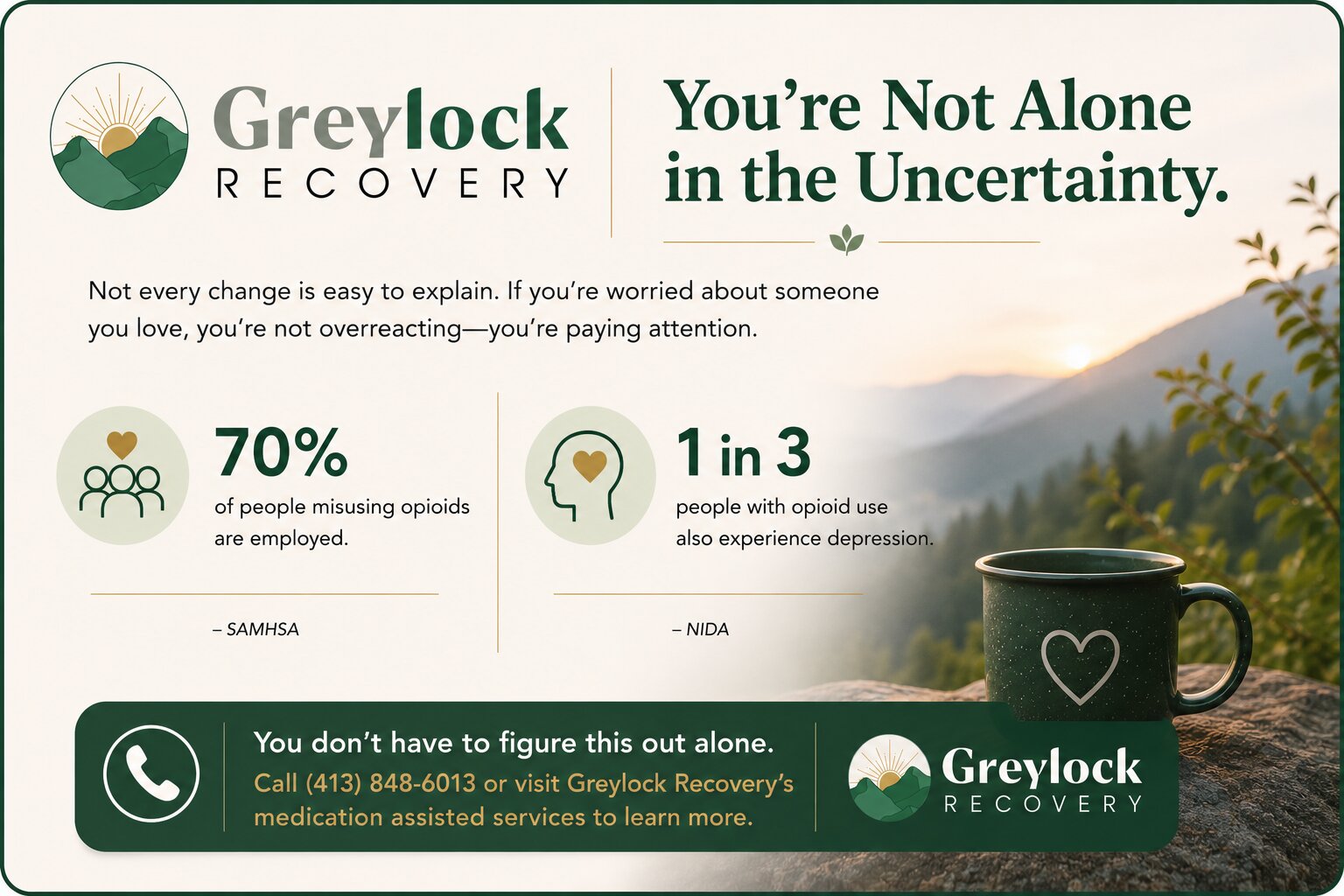
Loving Someone Through Uncertainty Is Exhausting
People often imagine there’s one big moment where everything suddenly becomes clear.
Usually, it’s slower than that.
It’s months of second-guessing yourself.
Months of wondering if you’re overreacting. Months of searching symptoms online late at night. Months of trying to decide whether to ask hard questions or stay quiet a little longer.
That emotional limbo can wear people down in ways they rarely talk about.
You start analyzing tiny things:
- The way they fall asleep
- How long they disappear into another room
- Whether their mood changes suddenly
- Whether they seem emotionally present or far away
You may even feel guilty for noticing.
Especially if you love them deeply.
Especially if part of you is afraid of being right.
Substance Use Doesn’t Mean Someone Has Lost Their Humanity
One painful misconception about addiction is the idea that people become completely different people.
But many people struggling with opioids still desperately want connection. They still love their families. They still care about who they are becoming.
They may just feel trapped between needing relief and fearing what happens if they stop.
That fear deserves compassion.
Especially for people who worry sobriety will erase their creativity, personality, emotional depth, or social confidence.
We hear versions of this all the time:
- “What if I become boring?”
- “What if I don’t feel like myself anymore?”
- “What if I lose the only thing helping me cope?”
Those fears are real.
But recovery is not about becoming emotionally flat or losing identity.
Often, it’s the opposite.
People frequently rediscover parts of themselves that had been buried underneath exhaustion, secrecy, shame, and survival mode for years.
The creativity usually stays.
The humor stays.
The sensitivity stays too.
What changes is the constant pressure of carrying everything alone.
You Don’t Need to Have Perfect Words
A lot of loved ones avoid conversations because they’re terrified of saying the wrong thing.
But perfect language isn’t what matters most.
Gentleness matters.
Honesty matters.
Connection matters.
Instead of accusations, try observations:
- “You seem really exhausted lately.”
- “I feel worried because you don’t seem like yourself.”
- “I miss feeling connected to you.”
- “You don’t have to hide how hard things feel.”
Sometimes people open up immediately.
Sometimes they deny everything at first.
Sometimes they simply remember that someone noticed them with compassion instead of judgment.
That still matters.
Help Can Look Different Than People Expect
Many people delay treatment because they imagine losing control over their life or identity.
But modern treatment is often much more human and individualized than people realize.
For some people, support may include therapy, emotional stabilization, peer support, or structured care. For others, medication assisted treatment services can help reduce cravings, stabilize daily functioning, and create enough emotional breathing room for recovery to actually feel possible.
That support is not about punishment.
It’s about helping someone stay alive long enough to reconnect with themselves again.
And that process doesn’t require someone to become a completely different person overnight.
Recovery Often Starts Smaller Than People Think
Sometimes recovery begins with a full treatment program.
Sometimes it begins with one honest conversation.
Or one Google search at 2am.
Or someone finally admitting:
“I don’t think I’m okay.”
People do not need to hit some dramatic rock bottom to deserve support.
And loved ones don’t need absolute proof before reaching for guidance either.
You are allowed to care before things become catastrophic.
You are allowed to ask questions.
You are allowed to hope.
FAQ
Is nodding off always related to opioid use?
No. Excessive sleepiness can happen for many reasons, including burnout, depression, sleep disorders, chronic stress, or certain medications. But frequent unexplained nodding off—especially alongside emotional or behavioral changes—can sometimes be connected to opioid use.
Can someone still function normally while struggling with opioids?
Yes. Many people continue working, parenting, socializing, or maintaining routines while privately struggling. Substance use does not always look obvious in the beginning.
What should I do if I think someone I love is using opioids?
Start with compassion instead of confrontation. Focus on what you’ve noticed rather than making accusations. If you’re unsure how to approach the conversation, speaking with a treatment professional can help you prepare.
Why do people fear getting sober?
For many people, substances become connected to emotional survival, creativity, confidence, or relief from pain. Some fear sobriety will change who they are or leave them emotionally exposed.
What is medication assisted treatment?
Medication assisted treatment combines medications with therapy and support to help people manage cravings, withdrawal symptoms, and recovery more safely. It’s designed to support stability and long-term healing, not replace one problem with another.
Can depression and substance use happen together?
Yes. Mental health struggles and substance use often overlap. Some people use substances to cope with depression, anxiety, trauma, or emotional overwhelm. Others develop depression alongside ongoing substance use.
How do I know if it’s time to seek professional help?
If someone’s exhaustion, behavior, mood, or daily functioning keeps changing in concerning ways, it’s okay to seek guidance early. You do not have to wait for a crisis before reaching out.
Call (413) 848-6013 or visit Greylock Recovery’s medication assisted services to learn more about treatment services and compassionate support.