I used to believe that if I stopped using, I would lose the most interesting parts of myself.
The creativity.
The emotional intensity.
The strange, electric feeling of being someone who lived outside the rules.
When someone first mentioned options like medication-supported recovery care, I didn’t hear possibility. I heard a warning.
Because in my mind, recovery meant becoming ordinary.
And ordinary felt like the worst thing that could happen to someone who built their identity around being different.
It took me a long time to realize that what addiction was actually doing wasn’t protecting my identity.
It was quietly shrinking it.
The Fear That Sobriety Would Flatten My Creativity
If you’re someone who feels things deeply—or someone whose creativity feels tied to emotion—you might recognize this fear.
Substances can start to feel like part of the creative process.
For me, they were tied to everything that made life feel vivid.
Late-night music sessions.
Sketchbooks filled with ideas.
Long conversations that felt philosophical and important at three in the morning.
The intensity felt meaningful. Almost sacred.
I convinced myself that the chaos was the source of the creativity.
But looking back, that wasn’t entirely true.
The chaos was also destroying the consistency that creativity actually needs.
I had ideas—but I rarely finished anything.
I started songs but forgot them the next day.
I wrote pages of thoughts that made sense at night but looked scattered in the morning.
The spark was real.
But addiction kept blowing it out before it could turn into something lasting.
The Identity Crisis That Comes With Recovery
Nobody really talks about the identity crisis that can happen when you start thinking about recovery.
Especially if you’ve spent years seeing yourself as a certain kind of person.
The artist who drinks too much.
The musician who pushes limits.
The writer who lives on the edge.
There’s a strange cultural myth that creativity needs suffering—or chaos—to exist.
So the idea of stepping into stability can feel like stepping away from your identity.
I remember thinking:
If I stop using, who am I going to be?
Would I still write the same way?
Would music feel different?
Would I lose the emotional intensity that made my ideas feel alive?
That fear kept me stuck for a long time.
Because even though addiction was hurting me, the idea of losing my identity felt worse.
The Quiet Moment Where Something Shifted
The shift didn’t happen dramatically.
It wasn’t a sudden moment of clarity.
It was slower than that.
When I entered a recovery environment and began exploring treatment services that included medication assisted support, the biggest change wasn’t immediate inspiration.
It was quiet.
My brain, which had been loud for years, started to calm down.
Before that point, my thoughts had felt like a crowded room.
Cravings. Anxiety. Regret. Excitement. Shame. All happening at the same time.
When the noise started to settle, something else appeared.
Space.
And in that space, something surprising started to grow again.
Curiosity.
Creativity Feels Different When Your Brain Is Calm
I used to believe creativity came from emotional turbulence.
The bigger the emotional swings, the more powerful the ideas.
But what I discovered during recovery surprised me.
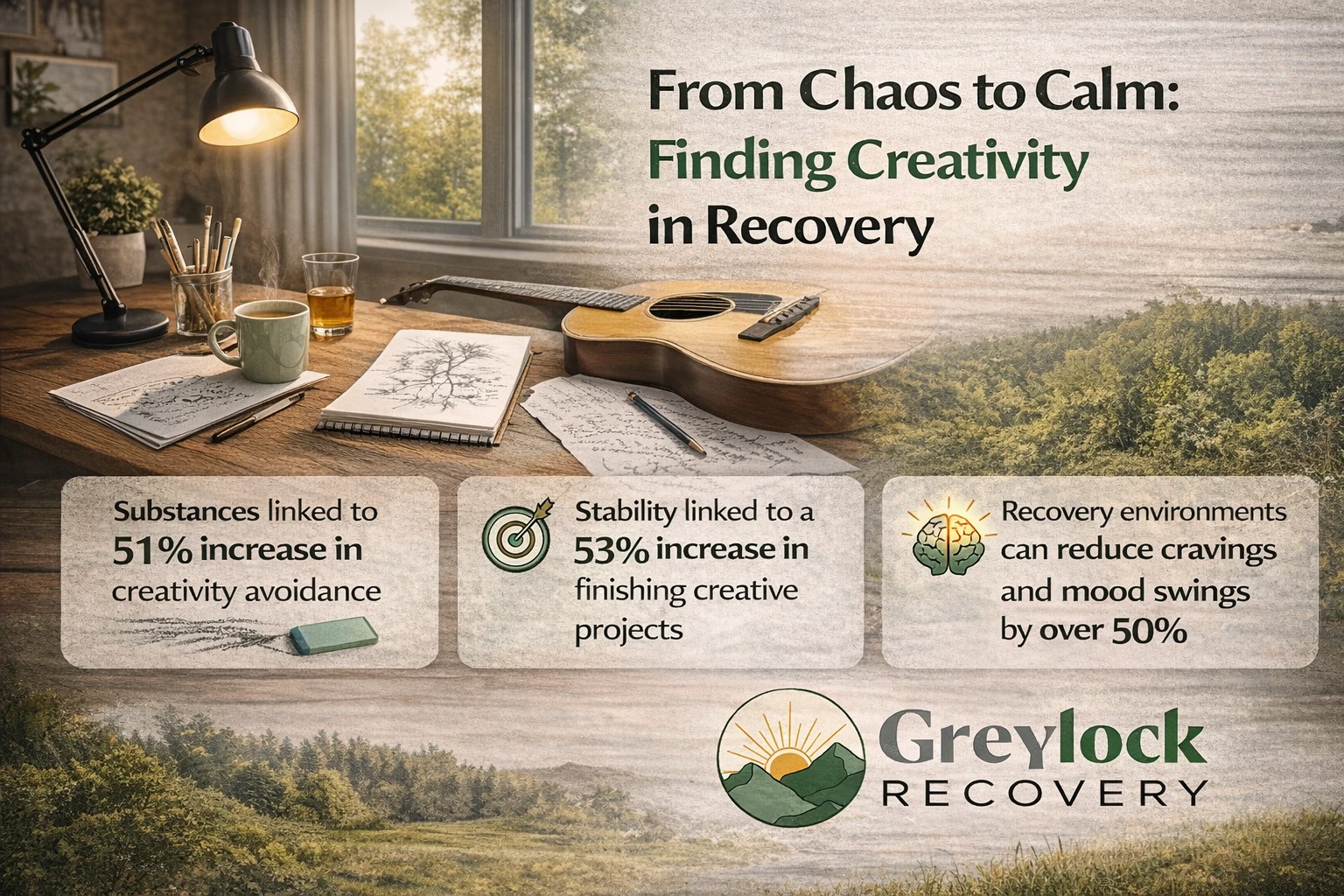
Creativity actually thrives in stability.
When your brain isn’t constantly chasing substances or recovering from them, your thoughts begin connecting in new ways.
You start finishing things.
Ideas stop disappearing halfway through.
Instead of bursts of inspiration followed by burnout, creativity becomes something steady.
It’s less chaotic.
But it’s also deeper.
And for the first time in years, I could actually build something from my ideas instead of just chasing them.
The Version of Myself I Found in Recovery
There’s a strange moment in recovery when you realize something important.
You didn’t lose yourself.
You found the version of yourself that addiction had been hiding.
The person who started showing up in my life was calmer, yes.
But also clearer.
I was still creative. Still curious. Still emotionally aware.
The difference was that my mind had enough stability to actually use those traits instead of being overwhelmed by them.
I started writing again.
But now I finished things.
I started playing music again.
But now I remembered what I created the next day.
The creativity didn’t disappear.
It matured.
The Truth About Medication That I Didn’t Expect
Before recovery, I had a lot of assumptions about medication.
Most of them were wrong.
I believed it would numb my emotions.
I thought it would dull my personality.
I imagined it would make me feel artificial—like I was living inside someone else’s brain.
What actually happened was very different.
Instead of flattening my emotions, it stabilized the extremes.
Instead of numbing my mind, it gave me control over it.
That stability meant I could experience emotions without being overwhelmed by them.
And for the first time in years, I could decide what to do with those emotions instead of reacting automatically.
That freedom changed everything.
Creativity Doesn’t Need Chaos
One of the biggest myths I believed was that creativity and chaos were inseparable.
That suffering somehow fueled artistic expression.
But what I’ve learned is that creativity doesn’t need chaos.
It needs attention.
It needs time.
It needs a brain that isn’t constantly hijacked by cravings, withdrawals, or emotional crashes.
Recovery didn’t remove my creative identity.
It gave it room to grow.
Instead of fighting my own brain every day, I could finally collaborate with it.
And that made the creative process feel more alive than it had in years.
The Strange Freedom of Emotional Stability
Another thing I didn’t expect in recovery was emotional stability.
For a long time, I believed that emotional intensity was the same thing as emotional depth.
But they’re not the same.
Intensity is explosive.
Depth is sustainable.
When my emotions stabilized, I didn’t lose depth.
I gained perspective.
I could still feel things strongly—but now I could understand them instead of being consumed by them.
And that made creative expression more honest.
Not louder.
But more real.
The Identity I Was Actually Protecting
For years, I believed addiction was protecting something important about me.
My creativity.
My personality.
My uniqueness.
But looking back, addiction was actually narrowing my life.
My world had become smaller.
My ideas rarely turned into finished work.
My relationships were strained.
My health was unstable.
The identity I thought I was protecting wasn’t thriving.
It was surviving.
Recovery didn’t erase that identity.
It expanded it.
If You’re Afraid Sobriety Will Change You
That fear is real.
Especially if substances feel connected to creativity, personality, or emotional depth.
But what many people discover is that recovery doesn’t erase identity.
It clears the noise around it.
When your brain has space again, something surprising happens.
Your curiosity returns.
Your focus returns.
Your creativity becomes sustainable instead of chaotic.
You don’t become less interesting.
You become more capable of actually living the life you imagined for yourself.
What I Wish Someone Told Me Earlier
If I could go back and talk to the version of myself who was terrified of recovery, I would say something simple.
The things you’re afraid of losing aren’t actually tied to addiction.
Your creativity isn’t in the substance.
Your personality isn’t in the chaos.
Your identity isn’t in the pain.
Those things are already yours.
Recovery doesn’t take them away.
It gives them a place to grow.
And once you experience that, the life you were protecting starts to look a lot smaller than the life you’re building.
Frequently Asked Questions
Will sobriety make me less creative?
Many people worry about this, especially artists, musicians, and writers. In reality, many individuals find their creativity improves when their brain is no longer overwhelmed by addiction. Clarity and consistency often strengthen creative work.
Does medication make people feel numb?
Medication used in recovery is designed to stabilize certain brain systems affected by addiction. Most people report feeling more balanced rather than emotionally numb. The goal is stability, not suppression.
Can you still have strong emotions in recovery?
Yes. Recovery does not remove emotional depth. It helps regulate emotional extremes so that feelings can be processed and expressed in healthier ways.
What if substances feel tied to my identity?
This is a common experience. Many people build parts of their identity around the environments and habits connected to substance use. Recovery often helps individuals rediscover who they are beyond those patterns.
Is recovery different for creative people?
Creative individuals often experience emotions intensely, which can sometimes increase vulnerability to substance use. But creativity can also become a powerful tool in recovery, helping people express emotions and rebuild identity.
How do you rebuild identity during recovery?
Identity often rebuilds slowly through new routines, creative exploration, relationships, and self-reflection. Many people discover that recovery allows them to reconnect with interests and passions they had before addiction took hold.
If you’re curious about recovery options that support stability while protecting your sense of identity, help is available. Call (413) 8486013 to learn more about our treatment services, medication assisted services in Williamstown, Massachusetts.