


Something feels very wrong.
You see the changes. The isolation. The mood swings. Maybe the empty pill bottles. Maybe the late-night texts that don’t make sense. Maybe the silence that feels heavier than shouting.
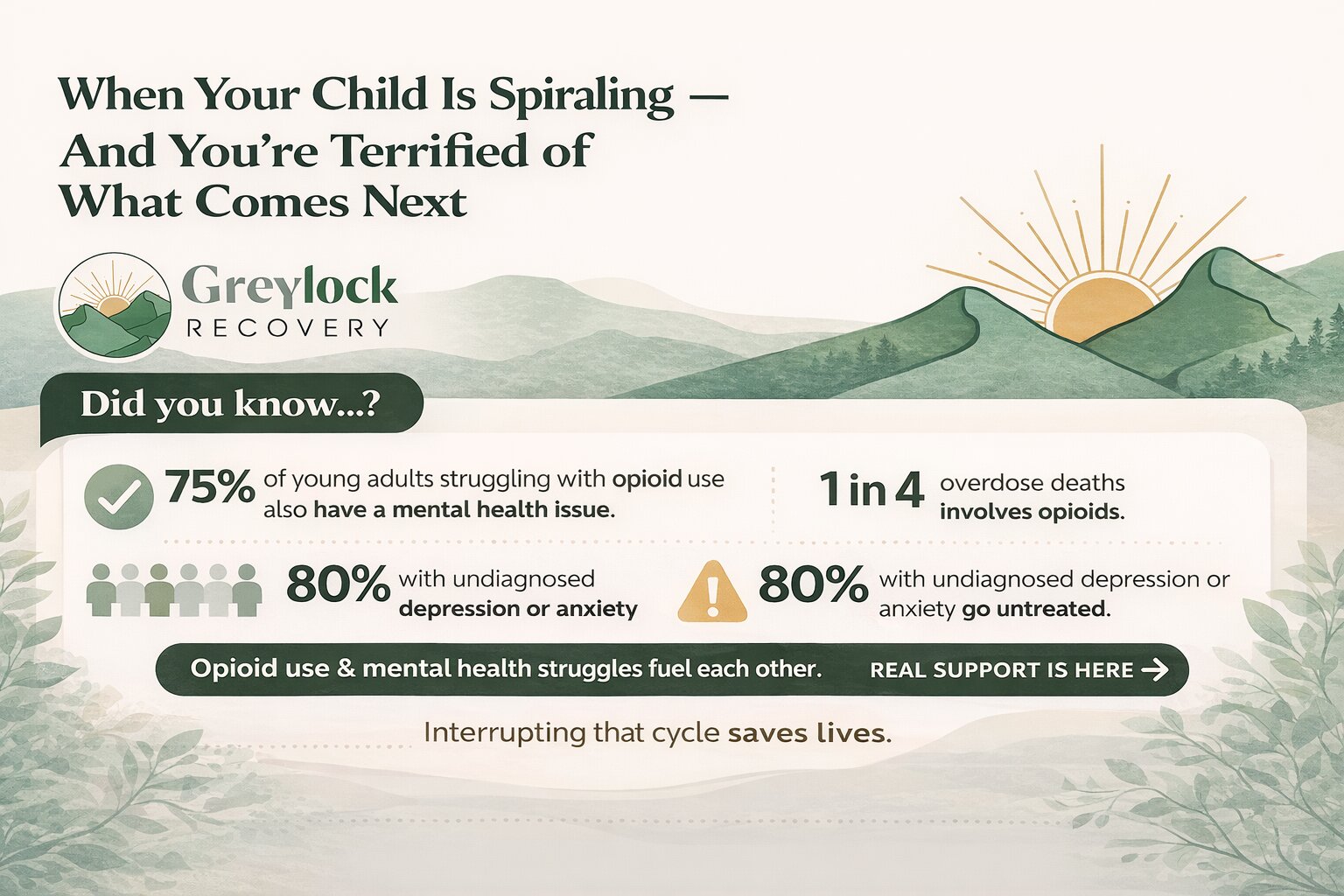
When opioid use and mental health symptoms start colliding, everything escalates. Fast.
And as a parent, you’re left holding two fears at once:
What if they hurt themselves?
What if I wait too long to act?
If this is where you are, take a breath. The panic you feel makes sense. But crisis does not mean hopeless. It means something needs stabilizing — and that is possible.
At Greylock Recovery, our approach to opioid addiction treatment is built for moments exactly like this — when safety, clarity, and steady care matter more than anything else.
Let’s walk through how treatment actually reduces risk during a mental health crisis — in real, practical terms.
When Substances and Mental Health Start Feeding Each Other
Opioids change brain chemistry quickly. They affect mood regulation, sleep cycles, stress response, and impulse control.
If your child was already struggling with anxiety, depression, trauma, or emotional instability, opioid use can intensify those symptoms. And when their mental health worsens, opioids may feel like the only thing that provides relief.
It becomes a cycle:
- Emotional distress increases.
- Substance use increases.
- Brain regulation decreases.
- Risk increases.
In a crisis, this loop can spiral quickly — especially if sleep deprivation, isolation, or hopelessness enter the picture.
Reducing risk starts with interrupting that cycle safely and intentionally.
Withdrawal Alone Can Intensify Crisis Symptoms
One piece many parents don’t realize: withdrawal itself can look like a mental health emergency.
Irritability.
Agitation.
Severe anxiety.
Hopelessness.
Panic.
Without proper support, these symptoms can escalate impulsive behavior or deepen despair. What might look like “they’re losing control” is sometimes the nervous system in distress.
Structured care reduces this volatility by:
- Monitoring physical symptoms
- Supporting safe stabilization
- Reducing unmanaged withdrawal stress
- Preventing abrupt, unsafe detox attempts
When the body is calmer, the emotional storm often quiets too.
Crisis Risk Is About Regulation — Not Just Overdose
Yes, overdose is a real fear. And it should be taken seriously.
But during a mental health crisis, risk also includes:
- Suicidal thoughts fueled by shame or despair
- Reckless decisions driven by emotional dysregulation
- Severe isolation that removes protective factors
- Paranoia or extreme anxiety worsened by substances
- Dangerous mixing of medications
Effective care addresses the whole risk picture.
Treatment lowers danger by restoring regulation — sleep, nutrition, structured days, therapeutic support, medication management when appropriate. Those basic rhythms rebuild the brain’s ability to respond instead of react.
It’s not dramatic. It’s steady.
And steady is what reduces crisis intensity.
Structure Is a Protective Factor
In the middle of crisis, life often becomes chaotic.
Sleep schedules disappear. Meals are inconsistent. Responsibilities fall away. Social connections shrink.
Structured treatment reintroduces:
- Consistent daily rhythm
- Scheduled therapeutic sessions
- Regular check-ins
- Supportive accountability
- Healthy routine
That structure becomes a guardrail.
It reduces idle time that might lead to impulsive use.
It reduces isolation that feeds hopelessness.
It reduces unpredictability that heightens anxiety.
Think of it like putting scaffolding around a building under repair. The scaffolding doesn’t fix everything overnight — but it prevents collapse while healing begins.
Treating Both at the Same Time Matters
One of the biggest risk factors during crisis is fragmented care.
If substance use is addressed but mental health isn’t, emotional instability continues.
If mental health is addressed but substance use continues, stabilization is limited.
Integrated care matters because opioids directly impact the same systems responsible for mood and impulse control.
In comprehensive opioid addiction treatment, both are evaluated together. That coordinated approach lowers:
- Emotional volatility
- Self-harm risk
- Relapse risk
- Crisis recurrence
The goal isn’t perfection. It’s safety and stabilization first.
Parents Often Feel Responsible — But You Are Not the Cause
In crisis, many parents spiral into guilt.
“I missed the signs.”
“I should’ve done more.”
“Did I make this worse?”
Addiction and mental health disorders are complex medical conditions. They are influenced by biology, environment, trauma, stress, and brain chemistry.
Your love did not cause this.
Your presence now can help stabilize it.
Treatment teams also support families — helping you understand what’s happening without blaming you for it. That clarity alone can reduce household tension, which lowers overall risk.
Early Stabilization Changes the Long-Term Picture
Crisis can feel like a cliff edge. But intervention during instability can dramatically shift the long-term trajectory.
When care begins during crisis:
- Dangerous patterns are interrupted sooner
- Brain chemistry has a chance to recalibrate
- Therapy begins while insight is growing
- Support networks are rebuilt
- Safety plans are established
Many parents assume they need to wait until “rock bottom.”
In reality, earlier support reduces the chance that rock bottom becomes catastrophic.
What Risk Reduction Actually Looks Like in Practice
You might be wondering, practically speaking — what changes?
Here’s what we often see when structured treatment begins:
Week 1–2:
- Improved sleep
- Reduced physical distress
- Slight decrease in agitation
- More coherent conversations
Weeks 3–4:
- Increased emotional awareness
- Reduced impulsivity
- Stabilized mood swings
- Less extreme highs and lows
Ongoing:
- Safer coping skills
- More consistent behavior
- Reduced crisis intensity
- Clearer long-term planning
Progress is rarely linear. But the baseline risk lowers as regulation improves.
Hope often returns quietly — not as excitement, but as calm.
You Don’t Have to Manage This Alone
Crisis convinces parents they must become investigators, doctors, and therapists overnight.
You don’t.
Your role is to care and stay connected.
Professional teams handle stabilization, assessment, and planning.
Reaching out does not mean you’ve failed. It means you’re protecting your child during a vulnerable moment.
And protection is an act of love.
Frequently Asked Questions
How does treatment reduce suicide risk during opioid use?
Substance use can intensify depressive symptoms and lower impulse control. Structured care improves monitoring, stabilizes mood, restores sleep, and provides therapeutic support — all of which reduce suicide risk factors. Addressing both substance use and mental health together creates safer conditions overall.
What if my child refuses help?
Resistance is common, especially in young adults. Sometimes beginning with a conversation — not an ultimatum — opens the door. Treatment teams can also guide families on next steps and communication strategies that reduce escalation rather than intensify it.
Is crisis intervention only for overdose situations?
No. Crisis can include suicidal thoughts, severe emotional instability, psychosis, dangerous impulsivity, or rapid deterioration in functioning. Early support often prevents medical emergencies from occurring.
How quickly can stabilization happen?
Some physical improvements occur within days. Emotional stabilization may take weeks. What matters most is gradual reduction in volatility and increased safety — not instant transformation.
Will treatment change my child’s personality?
No. The goal is not to erase who they are. It’s to restore clarity and regulation so their true personality can return without being overshadowed by substances or crisis-level distress.
What role do parents play during treatment?
Parents provide support, encouragement, and healthy boundaries. Treatment teams often include family education to help reduce enabling behaviors while strengthening connection. You are part of the support system — not the problem.
How do I know if it’s “bad enough” for treatment?
If you’re losing sleep. If you’re afraid of what could happen next. If behavior feels unpredictable or unsafe. That is enough reason to seek an evaluation. You don’t need catastrophe to justify care.
If your young adult is spiraling — emotionally, behaviorally, or both — waiting rarely reduces risk. Stabilizing support does.
At Greylock Recovery, we approach opioid addiction treatment with steady expertise and deep compassion for families navigating crisis. Safety comes first. Regulation comes next. Long-term healing follows.
Call 413-848-6013 or visit our Opioid Addiction Treatment services to learn more about our Opioid Addiction Treatment services in Williamstown, Massachusetts.