

I didn’t think I’d ever walk back through those doors.
After 90 days sober, I felt steady. Proud, even. Then one weekend turned into one bad decision. One bad decision turned into a spiral. And just like that, I was staring at the reality of going back to Residential Addiction Treatment—this time with a bruised ego and a head full of shame.
If you’re here after a relapse, I’m not going to talk to you like you’re brand new. You’re not. You know what recovery is. You know what’s at stake.
And that changes everything.
The Shame Was Louder Than the Cravings
Let’s be honest.
The cravings were intense. But the shame? That was brutal.
I kept thinking, “I had 90 days. People were proud of me. I ruined it.” That internal monologue can get vicious fast. It tells you you’ve failed, that you’ve disappointed everyone, that you don’t deserve another shot.
Walking back into Residential Addiction Treatment felt like showing up to school after cheating on a test. I expected judgment.
Instead, I got something unexpected: calm.
No one treated me like a failure. They treated me like someone who was hurting. That subtle shift cracked something open in me.
The First Time I Wanted Relief. The Second Time I Wanted Truth.
When I first entered residential care, I wanted the noise to stop.
I wanted detox to be over. I wanted my family off my back. I wanted sleep. I wanted the chaos in my brain to quiet down.
And to be fair, residential treatment gave me that foundation. Structure. Routine. Safety.
But if I’m honest, part of me still believed I could outsmart addiction. I thought maybe one day I’d be “different.”
After relapse, that illusion was gone.
The second time in Residential Addiction Treatment, I wasn’t chasing comfort. I was chasing honesty.
And honesty hits harder than withdrawal ever did.
I Stopped Performing Recovery
Here’s something we don’t talk about enough as alumni: you can look great on paper and still be white-knuckling it inside.
The first time, I was the “good client.” I participated. I journaled. I followed the schedule. I even helped new arrivals feel welcome.
But I was still managing my image.
I didn’t always admit when cravings came back. I downplayed resentment. I pretended my faith in recovery was stronger than it really was.
Relapse exposed that performance.
The second round of Residential Addiction Treatment felt different because I dropped the act. I said out loud when I didn’t believe in myself. I admitted that part of me missed using. I talked about the ego boost of being the “strong one.”
That kind of vulnerability isn’t pretty. It’s raw. But it’s real.
And real recovery only grows in real soil.
The Structure Felt Less Like Control and More Like Protection
The daily schedule hadn’t changed much.
Morning routine. Group therapy. Individual sessions. Accountability. Community meals. Check-ins. Lights out.
But the way I experienced it changed completely.
The first time, structure felt restrictive. Like I was being monitored. Like I had to prove something.
The second time, it felt protective.
Residential Addiction Treatment became a kind of container. A safe place where I didn’t have to make a hundred exhausting decisions every day. Where I didn’t have to pretend I was okay.
When you’ve just relapsed, your nervous system is fried. Decision-making is shaky. Emotions are volatile.
Structure isn’t control. It’s stabilization.
And I needed that more than I wanted to admit.
Relapse Gave Me Data I Didn’t Want—but Needed
Relapse isn’t something to romanticize. It’s dangerous. For some, it’s deadly.
But it does reveal weak points.
Mine showed me exactly where my recovery had thinned out:
- I stopped calling people when I was stressed.
- I isolated instead of asking for help.
- I told myself small lies: “I’ve got this.”
- I slowly disengaged from accountability.
None of that happened overnight. It was gradual.
Returning to Residential Addiction Treatment wasn’t about erasing the relapse. It was about studying it.
What triggered it? What did I ignore? What did I rationalize?
Relapse wasn’t a verdict on my character. It was information about my patterns.
And patterns can be changed.
The Work Went Deeper the Second Time
The first stay focused heavily on stabilization and building coping tools. That was necessary.
The second stay went deeper.
We talked about shame—not just from the relapse, but from long before addiction. The kind that whispers you’re only valuable if you’re exceptional.
We unpacked my fear of being average. My fear of being seen as weak. My tendency to self-sabotage when things were going well.
In Residential Addiction Treatment, I finally understood that sobriety isn’t just abstinence. It’s identity reconstruction.
It’s asking: Who am I without the chaos? Without the edge? Without the performance?
That question scared me more than detox ever did.
But sitting with it changed me.
I Stopped Measuring My Worth by My Sobriety Date
This might be controversial in some circles.
But I had to let go of obsessing over the number.
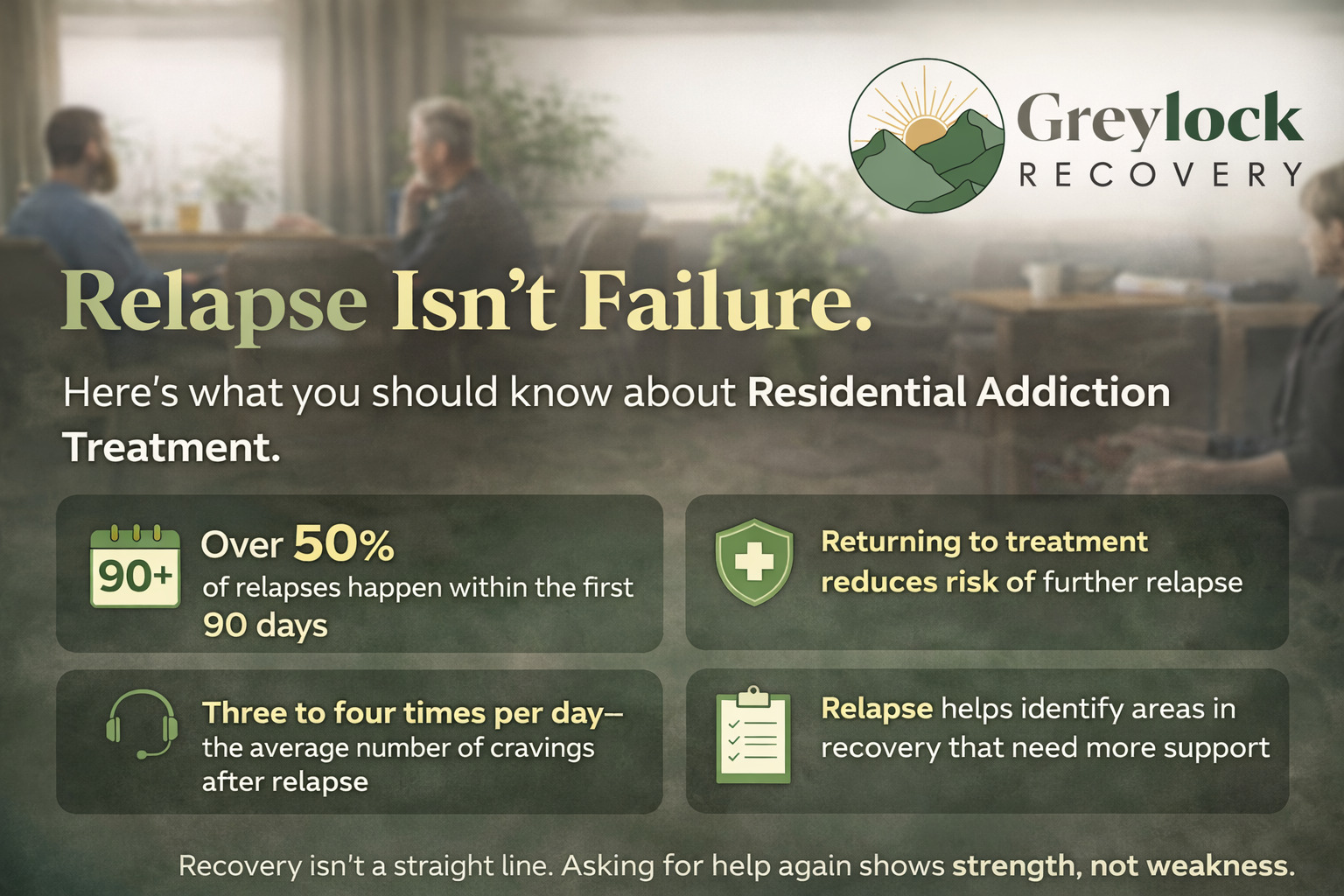
The first 90 days were everything to me. When I relapsed, I felt like the counter reset meant I was back at zero as a person.
That’s not how growth works.
Those 90 days taught me skills. They showed me I could live without substances. They built relationships. They gave me insight.
Relapse didn’t delete that.
Going back into Residential Addiction Treatment helped me see that recovery is layered. It builds on itself—even through setbacks.
You are not your worst weekend.
Walking Back In Was the Hardest and Strongest Thing I’ve Done
There’s something humbling about returning.
You think people will look at you differently. You think you’ll feel small.
What actually happened?
I felt seen.
Other alumni nodded with understanding. Staff welcomed me without drama. No one said, “I told you so.”
If you’re afraid to come back because you think you’ve “used up your chance,” hear this clearly:
Treatment is not a one-shot deal. Recovery is not a straight line.
Walking back into Residential Addiction Treatment after relapse isn’t weakness. It’s refusal to give up.
And refusal is powerful.
If You’re Sitting in the Aftermath Right Now
Maybe you’re reading this with a hangover. Or with a knot in your stomach. Or with your phone in your hand, debating whether to call.
I won’t pretend it’s easy.
Going back means admitting it happened. It means confronting people. It means facing yourself.
But staying out—pretending it’s fine—that’s harder in the long run.
Residential Addiction Treatment isn’t about punishment. It’s about recalibration. It’s about getting grounded before things spiral further.
You don’t have to wait until everything falls apart again.
FAQs About Returning to Residential Addiction Treatment After Relapse
Is relapse common after 90 days sober?
Yes. The 90-day mark is significant, but it’s also a vulnerable time. Confidence increases. External structure may decrease. Emotional triggers can resurface. Relapse doesn’t mean treatment “didn’t work”—it often means more support is needed.
Will staff judge me if I come back?
In a quality Residential Addiction Treatment program, the goal is stabilization and growth—not shame. Treatment professionals understand that relapse is part of many people’s recovery process. You’re far more likely to be met with concern and support than disappointment.
Do I have to start completely over?
Not emotionally, and not psychologically. While you may re-enter programming and structure, you are not starting from zero. You bring insight, prior work, and experience with you. That foundation matters.
How do I know if I need residential care again versus outpatient?
If you’re struggling with cravings, lack of structure, or escalating use, a higher level of care like residential treatment may be safer and more stabilizing. Residential Addiction Treatment provides 24/7 support, which can be critical after relapse. An assessment can help determine the right level of care.
What if I feel embarrassed facing other alumni?
That feeling is normal. Many alumni fear being seen as “the one who slipped.” In reality, most people in recovery understand how fragile early sobriety can be. Your willingness to return often earns more respect than hiding.
Is going back to treatment a sign that I failed?
No. It’s a sign that you’re still choosing recovery. Failure would be refusing help and pretending nothing happened. Seeking support again is an act of responsibility.
Relapse after 90 days can shake your identity. It can make you question whether you’re cut out for this.
You are.
Residential Addiction Treatment looked different to me the second time because I was different. More honest. More humbled. More willing.
If you’re an alum and you’re struggling, you don’t have to navigate this alone.
Call (413) 848.6013 or visit to learn more about our Residential Addiction Treatment services in Williamstown, Massachusetts.