
There’s a moment many of us hit—not always dramatic or loud—where we stop and think: Is this working?
Maybe it’s after another night of “just one” turning into four. Maybe it’s a hangover that feels a little too heavy. Or maybe it’s just a quiet nudge you can’t ignore anymore. If that sounds like you, you might be what’s now called sober curious—wondering what life could feel like with more clarity, less dependence, and a deeper connection to yourself.
That curiosity is powerful. It doesn’t mean you’re broken. It means you’re listening.
And for some, that first real listen—the first honest check-in—starts with residential addiction treatment.
You Don’t Have to Be in Crisis to Deserve Support
Let’s drop the gatekeeping right now: treatment is not reserved for people at their lowest.
You don’t need to lose your job, your relationships, or your grip on reality to seek help. That’s a myth. In fact, the earlier you recognize something’s off, the more options you have. You might not even be sure what “it” is—but something feels disconnected. That’s enough.
At Greylock Recovery, we meet people every day who aren’t falling apart—they’re waking up. They’re tired of wondering if they have a “real problem” and just want a safe space to explore the question.
Residential Treatment Isn’t a Last Resort—It’s a Safe Reset
Think of it like this: when your phone is glitching and lagging, what’s the first thing you do? Restart it.
Residential treatment is that restart—but for your emotional, physical, and mental well-being. It pulls you out of the distractions, the rituals, the expectations, and gives you a controlled, quiet space to figure out what’s really going on underneath.
There are no demands to declare a lifelong label or perform perfect readiness. There’s just support. And structure. And the freedom to pause long enough to hear your own thoughts.
What Happens in Residential Treatment?
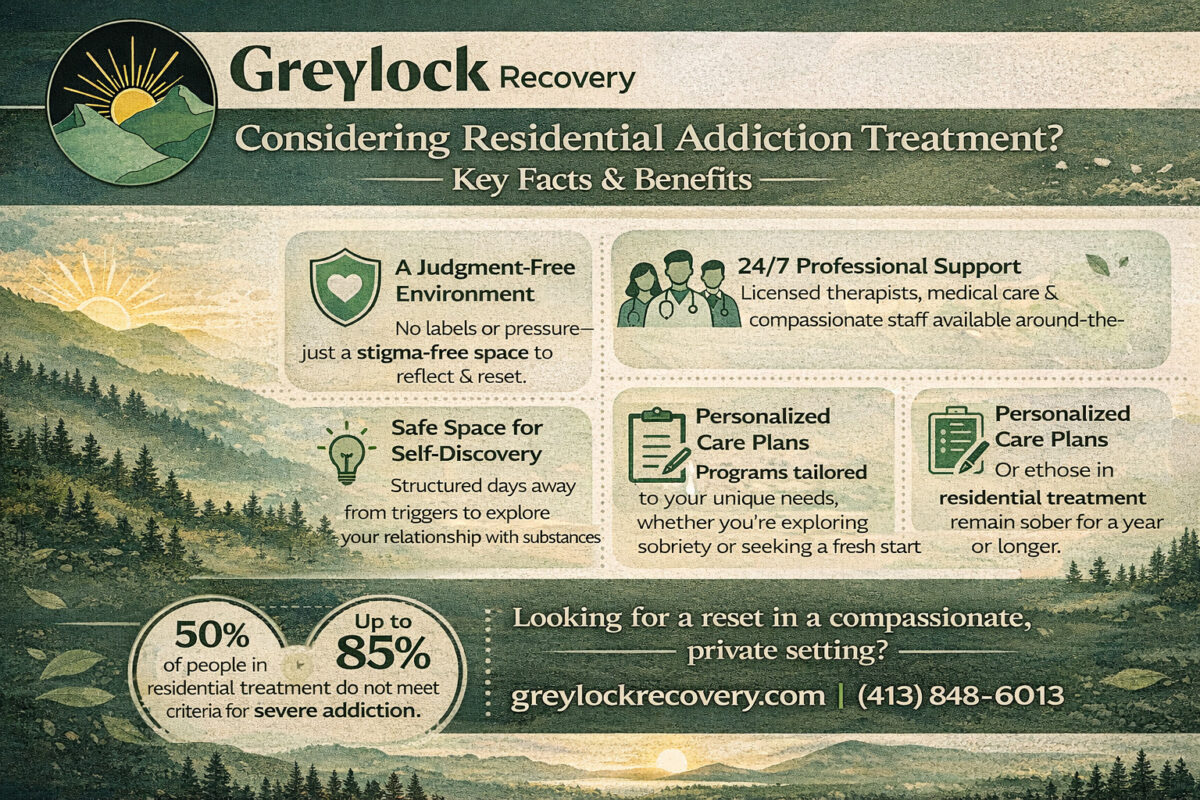
At Greylock Recovery, residential addiction treatment is a full-time, immersive program where you live on-site with access to:
- Individual and group therapy
- Licensed addiction and mental health professionals
- Daily structure and routines designed for healing
- Nutritional support, mindfulness, and fitness options
- 24/7 care in a stigma-free, private environment
But here’s what really matters: the internal shift.
Away from work stress, peer pressure, family dynamics, and digital noise, you finally get to meet yourself. Not the version numbed by drinking. Not the version you present on social media. The you underneath all that.
It’s Okay to Just Be Curious
One of the most powerful things we hear from clients is this:
“I didn’t know if I belonged here—but I’m so glad I came.”
You don’t have to have a dramatic backstory. You don’t have to know whether you’re “an addict.” You don’t need anyone else’s permission to want more from your life.
Sober curiosity is not a weakness. It’s a wisdom.
The World Won’t Pause—But You Can
Let’s be real: the outside world rewards over-functioning. If you’re holding it all together on the outside—work, bills, relationships—it’s easy to convince yourself there’s nothing wrong.
But what’s it costing you?
If alcohol or substances have become the thing that smooths the edges, helps you cope, or fills the quiet, it might be time to check in—not with society’s definition of “bad enough”—but with your own truth.
That’s what residential treatment offers: a bubble of stillness in a life that won’t stop spinning.
What If I Go and Realize I’m Not “That Bad”?
Then you leave with a deeper understanding of yourself, new tools for living with intention, and a clearer idea of what you do—or don’t—want to change.
That’s not failure. That’s growth.
This isn’t about labeling you. It’s about inviting you into an environment where reflection is allowed. Where honesty isn’t punished. Where you’re not performing your pain—you’re exploring your truth.
Healing Doesn’t Have to Be Dramatic
Not everyone hits a dramatic rock bottom. Sometimes healing begins in the quiet.
A tired exhale. A late-night Google search. A random blog (maybe this one) that makes something click.
And if that click leads you here—to considering residential addiction treatment—not because you’re broken, but because you’re ready to check in with yourself? Then you’re already doing something brave.
FAQ: Residential Addiction Treatment for the Sober Curious
Do I have to identify as an addict to go to treatment?
Absolutely not. At Greylock, we believe anyone seeking clarity, healing, or a healthier relationship with substances is welcome—no labels required.
What if I go and realize treatment isn’t for me?
Then you’ve still taken a powerful step toward self-awareness. Many clients leave with tools, insight, and peace of mind—even if they don’t pursue long-term treatment.
How long is residential addiction treatment?
Program lengths vary, but many clients start with 30 days. That said, we work with you to determine what feels right based on your goals and needs.
Is residential treatment only for people in crisis?
Not at all. While we support individuals in acute need, we also serve those who are functioning in daily life but quietly struggling or questioning their substance use.
Will I be judged if I’m not sure I want to stop completely?
Never. We honor your autonomy and support you wherever you are in your process—even if you’re just exploring what change might look like.
📍Looking for a judgment-free space to reflect on your relationship with substances? Learn more about our residential addiction treatment services and how we support people in with compassion, clarity, and curiosity.
📞 Call (413) 848-6013 or visit Greylock Recovery’s Residential Addiction Treatment page to take the next brave step—without pressure.