
I didn’t think I’d be the one who needed to come back.
I had 103 days. Real days. Days where I made coffee without shaking. Where I slept through the night. Where I looked my mom in the eye again and didn’t feel like I was lying.
Then I used. Not dramatically. Just one night. Then another.
And then I waited three full weeks before I could even imagine calling back. Not because I didn’t want help—because I was too ashamed to ask for it again.
If that’s where you are—sitting in the aftershock of relapse, trying to figure out whether you still deserve support—I want to tell you the truth about what happens when you return to a medical detox program.
Because I’ve done it. And it’s not what you think.
That first call after relapse hurts like hell
I rehearsed the script a dozen times. I told myself I’d just “check on availability,” like I wasn’t drowning again. Like this was casual. Like I hadn’t already thrown away everything I’d worked for.
But the person who answered the phone at Greylock Recovery didn’t ask for an explanation. She just asked: “Are you safe right now?”
Not “why’d you do it?”
Not “what happened this time?”
Not even “are you ready?”
Just safety. Presence. Calm.
That call didn’t erase my shame. But it reminded me I didn’t have to be perfect to pick up the phone.
Coming back to detox feels different
The first time I detoxed, I was sick, disoriented, and convinced I was dying.
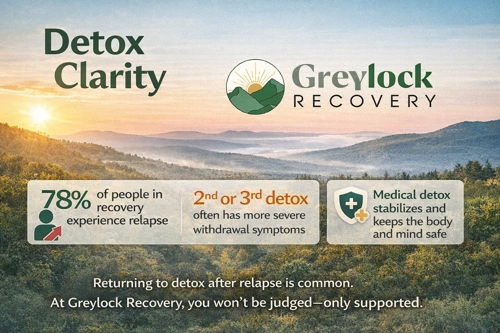
The second time? The physical stuff was lighter. But the emotional weight? That was heavier than before.
Because this time, I knew what I’d had. I remembered feeling steady. Proud. Like maybe I was becoming someone I could live with.
And I’d lost that.
But the staff at Greylock didn’t treat me like a backslider. They treated me like a human being in pain. No lectures. No pity. No drama.
Just: “You’re here. Let’s help.”
I didn’t realize how much I needed someone to say that out loud until they did.
The shame fades faster than you think
Relapse wants you isolated. It whispers, “You’re the only one who messed this up.” It paints detox like a courtroom you’ll be dragged into, exposed and judged.
It’s not.
Back in the Greylock detox wing, I saw familiar faces—not people judging me, but people walking through the same fog. Staff who remembered me. Clients who’d been where I was.
One guy even said, “Man, you’re back? Good. That sh*t’s been hard lately.”
No sarcasm. No surprise. Just a kind of shared shrug—like, yeah, it happens. You’re not special. And that’s actually comforting.
I told the truth faster this time
First detox, I lied through my teeth. I said I was “ready.” I said I’d “never go back.” I said all the right recovery phrases because I thought that’s what I was supposed to do.
Second time? I told the nurse during intake, “I’m exhausted and I’m not sure I even want to try again.”
She nodded and said, “That’s okay. You’re not the only one. You don’t have to figure it out today.”
And just like that, I didn’t have to pretend.
I wasn’t performing recovery anymore—I was actually being cared for.
Detox isn’t starting over. It’s restarting safety.
What I learned this time is that detox isn’t a punishment or a consequence.
It’s a medical pause.
When you relapse, your nervous system goes back into chaos. Sleep, hunger, digestion, emotion—all scrambled. You don’t need more willpower. You need stabilization.
That’s what a medical detox program does. It pulls you out of fight-or-flight. It helps your body settle, so your brain can think again.
From there, you can make real choices. Not desperate ones.
At Greylock, they reminded me: “This is your second detox, not your first day of life. You still have every skill you built before. This is just where we restart your footing.”
They didn’t make me decide everything at once
I thought detox would come with pressure. “What’s your plan? Are you going inpatient? Who’s your sponsor? What’s your relapse prevention strategy?”
Nope.
They asked how I was feeling. What I needed. What support I might want next. And when I didn’t know? They didn’t rush me.
I ended up choosing outpatient. Not because someone talked me into it—but because I felt clear-headed enough to want it again.
Sometimes, that’s what detox gives you. Not direction. Not motivation. Just clarity.
And in this game, clarity is gold.
What helped most? Not being treated like a failure.
That was the deepest wound—the belief that I’d failed and no one would look at me the same.
But the clinicians at Greylock didn’t flinch. Not once. And that did something to me.
It made me feel worth helping again.
They reminded me that relapse isn’t rare. That shame is normal. That coming back takes more courage than pretending you’re fine.
They didn’t erase my 103 days. They held them. They helped me carry that experience forward—not bury it under guilt.
And that changed everything.
FAQs About Returning to Detox After Relapse
Is it common to relapse after 90 days?
Yes. It’s more common than most people admit. The 90-day mark can bring overconfidence—or emotional exhaustion. Both can lead to relapse. You’re not alone.
Will I be judged for coming back?
No. Not at Greylock. Our team understands that relapse happens. You won’t be shamed or interrogated. You’ll be treated with the same care and dignity as your first time.
What’s different about detox after a relapse?
Medically, withdrawal symptoms may be different (shorter or milder, depending on substance and use patterns). Emotionally, returning often brings more grief, but also more openness. You may find yourself more honest and more receptive to support.
Do I have to commit to treatment again?
No. Detox is a short-term stabilization process. You’ll have the option to explore next steps, but there’s no forced pathway. Our team will walk with you, not push you.
Will I lose the progress I made before?
Absolutely not. Time sober, skills learned, insights gained—they’re not erased by relapse. Detox helps you reconnect with what’s still yours.
How do I know if it’s time to call?
If you’re using again and struggling to stop, or if withdrawal symptoms are creeping in, it’s time to call. You don’t have to wait for a crisis. You don’t have to hit another bottom.
Greylock Recovery offers a medical detox program in Williamstown, MA that welcomes returning alumni with professionalism, warmth, and zero judgment. We support individuals from across Berkshire County and beyond.
Call If You’re Not Ready, But Know You Need Help
You don’t have to explain everything. You don’t have to make promises. You just have to let someone pick up the phone and say, “We’re here.”
Call (413) 848-6013 to learn more about medical detox program services in Williamstown, Massachusetts.