They packed light.
Just enough for a “mental health break.” A couple outfits, phone charger, toiletries. Told their partner it was just a quick reset. Told their boss they’d be offline for the weekend. Told themselves they’d come back more focused.
What they didn’t plan on was staying. What they didn’t expect was needing it as much as they did. What started as a weekend in the Berkshires turned into a 30-day stay at a residential treatment program—and possibly the most important decision of their life.
They Were “Fine”—Until They Weren’t
They weren’t sleeping, but they showed up.
They forgot lunch, but never missed a deadline.
They made everyone laugh on the team call—even as their hands shook under the desk.
From the outside, everything looked polished. Successful. High-functioning.
That was the trap.
Because high-functioning doesn’t mean healthy. It means you’re good at hiding it. And they were a master at hiding: the drinking, the spiraling anxiety, the pills they told themselves they weren’t “dependent” on.
They weren’t crashing. They were eroding—quietly, steadily, painfully.
One Too Many Lies—And the Illusion Cracked
It wasn’t some explosive moment that led them to Greylock. It was something smaller. Mundane, even.
They told their partner they’d be home at 7. They didn’t show up until midnight and had no memory of the in-between. They missed a niece’s birthday they swore they’d be at. They sat through a Zoom call barely coherent and hoped no one noticed.
The problem wasn’t just the use. It was the double life. The mask. The exhaustion of pretending everything was fine when inside, it was anything but.
They hit a point where the lies exhausted them more than the life they were protecting. That’s when they Googled “retreat in Massachusetts.” Not “rehab.” Not “residential treatment.” Just “quiet.”
From a Reset Weekend to Real Recovery
They didn’t arrive at Greylock Recovery ready to admit anything.
They just needed to disappear for a few days. To unplug. Sleep. Maybe meditate. Catch their breath before diving back into the chaos.
But something shifted.
It was the first time in months—maybe years—they weren’t performing. Weren’t numbing. Weren’t lying.
They sat in a group session “just to observe” and heard someone describe their exact life.
They cried in therapy without trying to hold it together.
They admitted they were tired of waking up scared and falling asleep numb.
By Day 4, they extended their stay.
By Day 7, they called it necessary.
By Week 3, they called it life-saving.
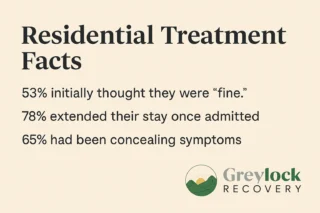
What Makes Residential Treatment Different
There’s a reason why a residential treatment program in Williamstown, Massachusetts can do what podcasts, planners, and half-hearted detox attempts can’t.
It removes you from the environment that fuels the spiral.
No triggers. No fake smiles. No ability to perform your way out of the hard parts.
Here, you eat regular meals, take real breaths, and speak honestly.
Therapy doesn’t stop at the hour mark. Your pain doesn’t get rushed out the door. You learn how to tolerate silence, uncertainty, and truth.
You don’t “lose yourself” in treatment. You remember who you were before the substance took up all the space.
The High-Functioning Myth
Here’s the lie: “If I can hold a job, I’m not that bad.”
Here’s the truth: you can be a top performer and still be hurting deeply.
Addiction doesn’t always look like rock bottom. Sometimes, it looks like overachieving. Like smiling at brunch. Like ordering a second drink while negotiating a contract and calling it “part of the industry.”
We work with professionals, parents, creatives, and caregivers who’ve mastered the art of appearing okay. And most of them walked through our doors thinking they weren’t “addicted enough” to be here.
They were.
They belonged here. You might too.
No Crashing. Just Permission to Stop.
Some people find recovery after crisis. Others find it after enough quiet dread stacks up to become unbearable.
They didn’t overdose.
They didn’t get fired.
They just got tired. Tired of managing, micromanaging, and hiding the truth from everyone—including themselves.
Residential treatment gave them something they hadn’t allowed themselves in years: permission to stop pretending.
Not to collapse—but to rest. To pause. To recover. To rebuild.
They Went Back—But Not to Who They Were
After 30 days, they left with more than coping skills.
They left with boundaries. With sleep. With honesty. With less need to numb and more curiosity about feeling.
They didn’t go back to being the person they were before the drinking started.
They became someone new—someone who didn’t have to perform wellness to deserve rest.
If You Recognize Yourself in This, You’re Not Alone
Maybe your version of “one weekend away” is this blog.
Maybe it’s a phone call you haven’t made.
Maybe it’s a question you’ve started to ask yourself: Could I be functioning—and still falling apart?
If that’s even a maybe… then it’s worth finding out.
Not with shame. Not with urgency. Just with space. That’s what we offer here at Greylock.
FAQs About Residential Treatment for High-Functioning Adults
Do I have to identify as an alcoholic or addict to go to treatment?
No. You don’t need a label to qualify for help. If your substance use is interfering with your emotional well-being, relationships, or ability to feel safe in your own skin, you’re allowed to seek treatment—no diagnosis required.
What does a typical day in residential treatment look like?
Structure helps ease the chaos. Most days include:
- Morning meditation or check-in
- Group therapy
- Individual counseling
- Psychoeducation groups
- Movement or wellness activities
- Free time for reflection, reading, or rest
There are no lectures or pressure—just rhythm, support, and real conversations.
Can I work while I’m in residential treatment?
We strongly encourage clients to unplug during their initial stay. High-functioning individuals often use work as a distraction from healing. That said, if you have urgent professional obligations, we’ll help you set boundaries that don’t compromise your recovery.
How long do I have to stay?
We offer 30-, 60-, and 90-day options. Many high-functioning clients start with a 30-day stay and choose to extend based on their progress. You’ll collaborate with your treatment team to determine what feels most supportive.
What if no one knows I’m struggling?
Most people who come to Greylock have kept their struggle quiet. You don’t have to broadcast your decision. We honor privacy, confidentiality, and the courage it takes to walk in quietly and say, I need help.
What happens after residential treatment?
We help you transition into ongoing support. That might include an intensive outpatient program, individual therapy, or sober living. You won’t leave here without a plan—and support for what comes next.
You don’t need to crash to start over.
Call (413) 848-6013 to learn more about our residential treatment program services in Williamstown, Massachusetts. Your story doesn’t have to end like this. You’re allowed to rewrite it—starting now.